
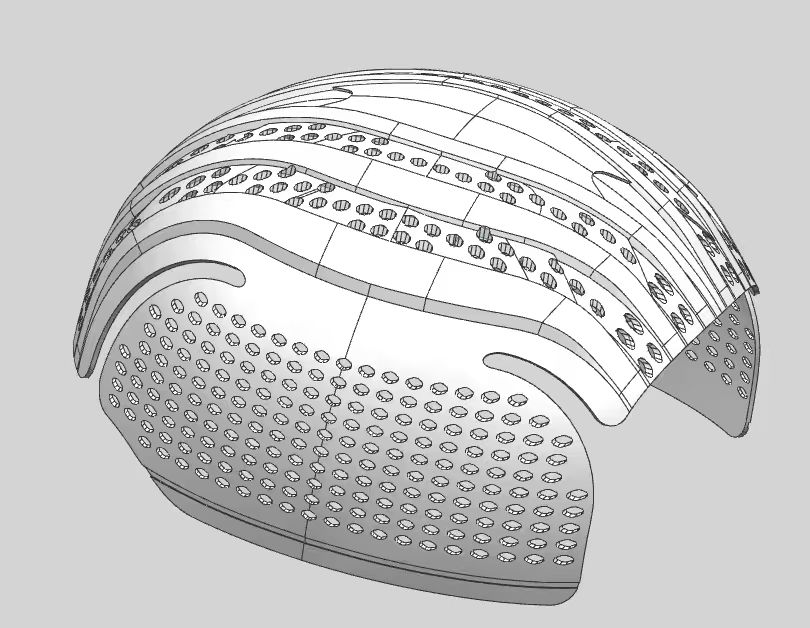
What Are Bump Cap Users Really Struggling With? 10 Pain Points We Found
At Aurora Sports, head protection has always been at the center of what we do.
As a helmet manufacturer, we spend a great deal of time thinking about impact protection, fit, comfort, ventilation, materials and—perhaps most importantly—whether people will actually want to wear the product throughout their workday.
As we prepare to add bump caps as a new product category, we wanted to start in the same place we believe good product development should always start:
with the people already using them.
We studied customer feedback and reviews of popular bump caps and bump-cap inserts to understand what users like, what frustrates them and where existing products still leave room for improvement.
Some patterns appeared again and again.
Wearers want something lightweight and discreet. They like the idea of getting basic head protection without looking as though they are wearing a traditional industrial helmet.
But that simplicity introduces its own challenges.
Fit, heat, pressure, movement, cleaning and product positioning can all become problems.
And these problems do not affect only the person wearing the bump cap.
They also affect employers purchasing products for their teams and dealers trying to recommend the right product to their customers.
Here are some of the most important pain points we found.
1. “Universal Fit” Does Not Always Feel Universal
One of the most common challenges is fit.
A bump-cap insert may be marketed as universal, but people have very different head shapes and sizes. Baseball caps also vary considerably in crown height, width and construction.
An insert that fits comfortably inside one cap may feel too wide, too tall or too tight inside another.
For the wearer, this can mean:
-
Pressure around the forehead
-
Tightness at the temples
-
Difficulty adjusting the baseball cap
-
An insert that sits too high
-
Discomfort after several hours of wear
This becomes an even bigger issue for employers.
If a company purchases one model for 100 employees, a “one-size” solution may work very well for some workers and poorly for others.
For dealers, that can turn into returns, complaints and questions about whether the customer purchased the wrong product.
A successful bump-cap design therefore needs to consider fit adaptability, not simply head circumference.
2. Hard Shell Edges Can Create Pressure Points
The protective shell needs enough structure to perform its intended function.
But rigid shell construction can create another problem: concentrated pressure.
Users sometimes report feeling the shell around the forehead, temples, sides or rear of the head—particularly after the cap has been worn for an extended period.
The problem can become worse when the wearer tightens the baseball cap to stop the insert from moving.
This creates a difficult design balance.
The shell needs structure, but the wearer should not constantly feel that structure pressing against the head.
For product developers, areas such as shell geometry, material flexibility, edge design and padding placement can have a major influence on wearing comfort.
3. Heat and Sweat Build Up Faster Than Expected
One of the strongest recurring themes in bump-cap feedback is heat.
A worker may already be wearing the cap in a warm warehouse, workshop, outdoor jobsite or physically demanding environment.
Adding a protective insert creates another layer around the head.
Even inserts with ventilation holes can still trap heat because airflow depends on more than the number of openings in the shell.
The complete system includes:
-
The protective shell
-
Internal padding
-
The wearer’s hair
-
Baseball-cap fabric
-
Cap ventilation holes
-
Space between the head and shell
If these components do not work together, the cap can become hot, sweaty and uncomfortable.
That matters because comfort is directly related to wearing behavior.
A protective product provides little practical benefit if workers regularly remove it because they are too hot.
4. The Insert Can Make a Normal Baseball Cap Look Bulky
The low-profile appearance of a bump cap is one of its biggest attractions.
Many users want some additional head protection without looking as though they are wearing traditional industrial headgear.
But adding an insert inside a baseball cap takes up space.
Depending on the shell geometry and the cap being used, the result may look:
-
Too tall
-
Too round
-
Overfilled
-
Wider than a normal cap
-
Raised noticeably above the head
This creates an interesting product-development challenge.
A bump cap should provide appropriate coverage while still preserving the familiar appearance that attracted the customer to the product in the first place.
For dealers, appearance is also important because customers often compare bump caps visually before they ever compare technical details.
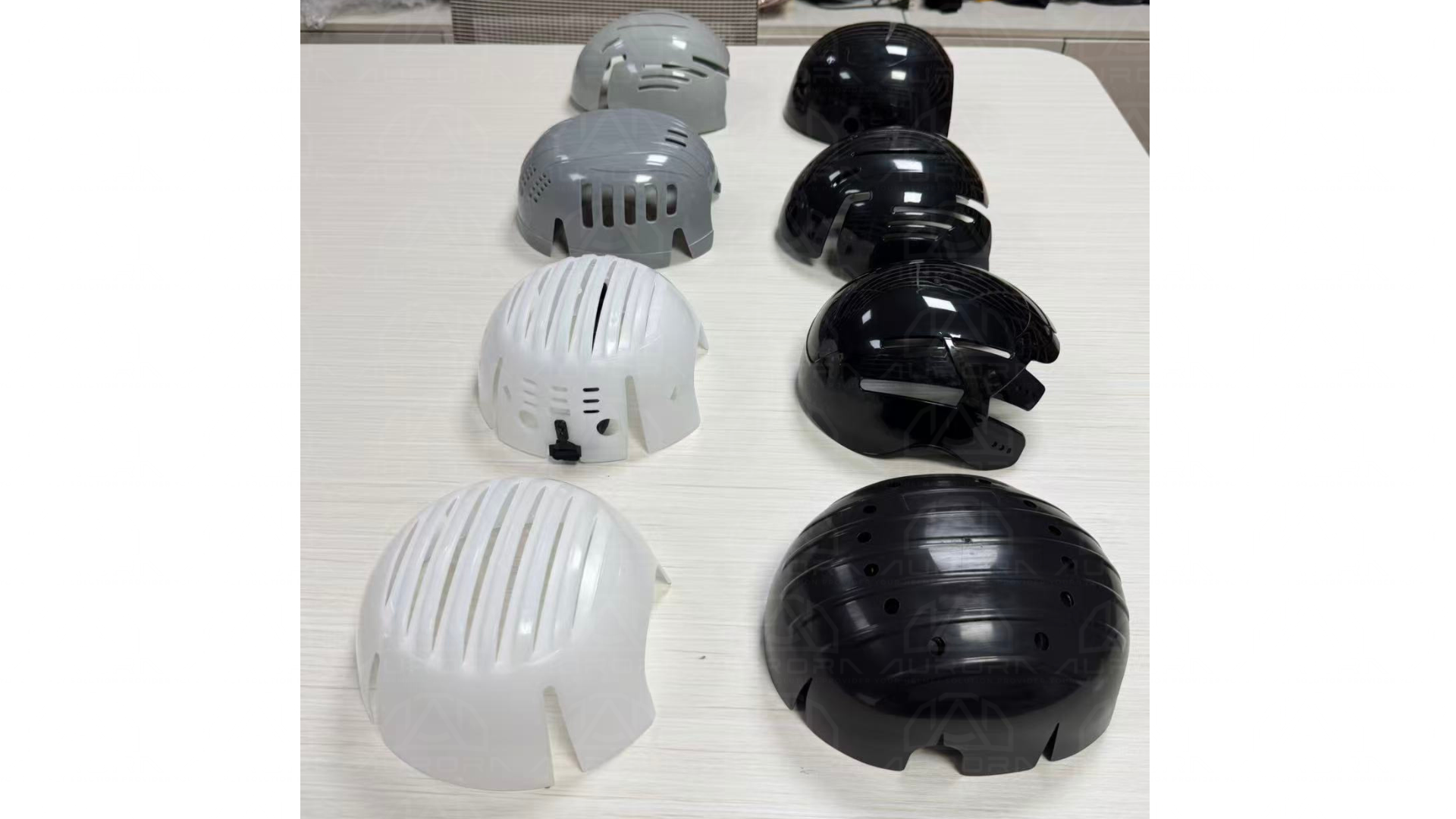
5. The Insert May Move During Work
Another problem appears when the wearer starts moving.
A bump-cap insert that feels fine while standing still may shift when someone:
-
Bends forward
-
Looks upward
-
Climbs
-
Turns quickly
-
Crawls into a confined space
-
Performs repetitive physical work
Many inserts depend heavily on the baseball cap itself to hold them in position.
If the cap is too loose, the insert may move.
If the wearer tightens the cap to solve the problem, pressure and discomfort may increase.
So the real challenge is not simply making an insert tighter.
It is finding a way to create better stability without creating excessive pressure on the wearer’s head.
6. Trim-to-Fit Sounds Simple—Until the Customer Has to Cut It
Some universal bump-cap inserts allow the wearer to trim part of the shell to accommodate different cap depths.
From a product-design perspective, that adds flexibility.
From a customer’s perspective, however, it can also add uncertainty.
The user may wonder:
Where should I cut?
How much should I remove?
Do both sides need to be equal?
What happens if I cut too much?
Will the trimmed edge still be comfortable?
Could modification affect how the product is intended to perform?
For an individual consumer, making a mistake can mean ruining one insert.
For an employer fitting a large workforce, the issue becomes much bigger.
For a dealer, complicated fitting instructions may mean additional customer service, installation questions and possible returns.
Adaptability is valuable—but the adjustment process should be intuitive and repeatable.
7. Padding Helps Comfort—but Creates Its Own Problems
Padding is usually added to improve comfort and reduce direct shell contact.
But padding introduces additional questions.
How much padding is enough?
Where should it be placed?
Does it block ventilation?
Does it absorb sweat?
Can it be removed?
Can it be washed?
How quickly does it dry?
Customer feedback shows why these details matter.
A soft pad can feel comfortable when new, but after repeated use it may absorb perspiration, retain moisture and eventually develop odor.
For workers wearing the same bump cap every day, hygiene becomes an important part of the overall ownership experience.
For employers and dealers, replaceable or washable components can also make a product easier to maintain over its usable life.
8. Workers Want Protection Without Feeling Like They Are Wearing PPE
This is one of the most interesting things about the bump-cap category.
Many customers like bump caps precisely because they do not look like traditional industrial head protection.
The familiar baseball-cap appearance can make the product feel lighter, less intrusive and more natural to wear.
That creates a design opportunity—but also a responsibility.
A bump cap should look approachable without creating confusion about what level of protection it is intended to provide.
This distinction is especially important for distributors and employers.
If the product looks too much like an ordinary baseball cap, the wearer may misunderstand its protective limitations.
If it looks too much like industrial headgear, one of the main reasons customers chose a bump cap may disappear.
Good product design therefore needs to balance appearance, protection and clear communication.
9. A Bump Cap Is Not a Hard Hat
This is one of the most important issues in the entire category.
Bump caps and industrial safety helmets are designed for different working conditions.
A bump cap is generally intended for situations where the wearer may bump their head against stationary objects—for example shelving, low ceilings, equipment or overhead structures.
It should not be confused with head protection selected for hazards involving falling or flying objects or other conditions requiring an appropriate industrial safety helmet.
For manufacturers, dealers and employers, communicating this difference clearly is critical.
A product listing should not simply say what the product can do.
It should also make clear what the product is not designed to do.
Clear positioning protects the end user and helps dealers recommend the correct type of head protection for the application.
10. Dealers Have Pain Points Too
When discussing bump-cap design, it is easy to focus entirely on the wearer.
But dealers and distributors experience many of the consequences of poor product design.
Imagine selling a product described as “universal.”
One customer says it fits perfectly.
Another says it is too tight.
Another says it makes their cap look oversized.
Another wants to know which baseball caps are compatible.
Someone else cut the insert incorrectly and wants a replacement.
Another customer assumed it provided the same protection as a hard hat.
These become dealer problems.
A strong B2B product therefore needs to be easy to explain, easy to size, easy to fit and easy to position correctly.
Clear sizing information, compatible-cap guidance, understandable instructions and accurate protection claims can be nearly as important to a distributor as the physical product itself.
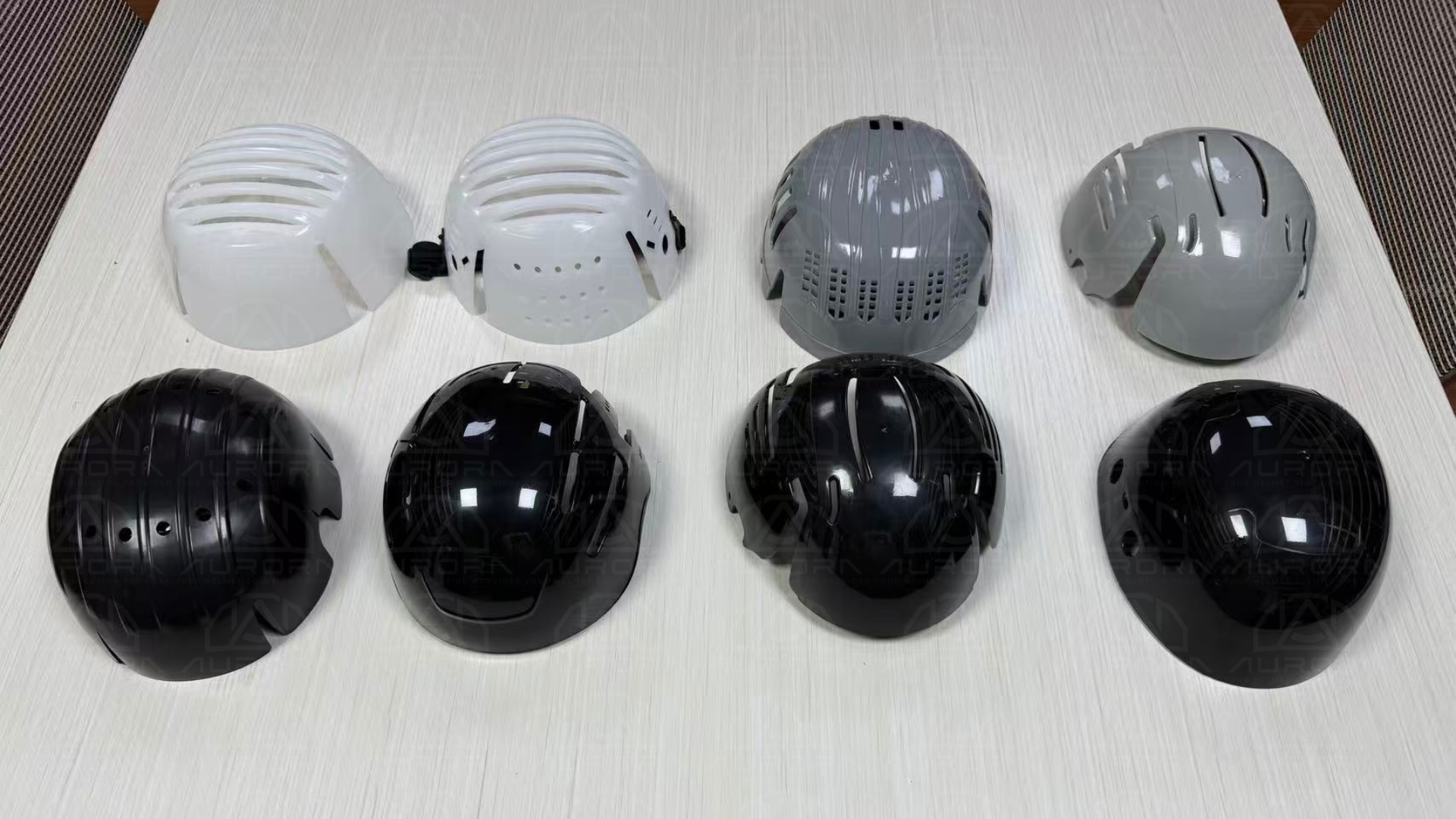
There Are Really Three Customers Behind Every Bump Cap
Looking at these pain points has helped reinforce something we already know from manufacturing helmets:
A head-protection product has to work for more than one person.
The end user wants:
Comfort, lightweight construction, ventilation, stability and a product they are willing to wear all day.
The employer or safety manager wants:
Consistent fitting, appropriate protection, easy maintenance and a solution that employees will actually use.
The dealer or distributor wants:
Clear product positioning, fewer fit-related complaints, simple sizing, fewer returns and a product that is easy to recommend confidently.
A successful bump-cap product has to consider all three.
Why Is Aurora Sports Studying These Problems?
For us, moving into bump caps is a natural extension of what we already do.
Aurora Sports has experience developing and manufacturing helmets and protective headgear. That means we already think every day about issues such as shell materials, impact management, fit, ventilation, padding, retention systems, comfort and manufacturing consistency.
But entering a new product category should not mean simply taking what already exists and producing another version of it.
We believe the better question is:
What problems are people still trying to solve?
That is why we have been studying existing bump-cap products and listening carefully to the experiences of the people who use them.
The reviews are valuable because they reveal things that are difficult to understand from a specification sheet.
A specification can tell you the dimensions of an insert.
A wearer can tell you that after four hours, a particular edge starts pressing against their temple.
A product photo can show ventilation holes.
A worker can tell you whether the cap still feels hot in the middle of a shift.
A product listing can say “universal fit.”
A distributor can tell you how often customers ask whether it will fit their particular cap.
That real-world feedback is where better product development begins.
From Helmet Manufacturing to the Next Generation of Bump Caps
As Aurora Sports prepares to introduce bump caps as an additional product category, our objective is not simply to add another item to our catalog.
We want to understand the category first.
That means examining the entire wearing experience:
Fit. Pressure. Ventilation. Stability. Weight. Padding. Hygiene. Cap compatibility. Appearance. And clear communication about protection.
Some of these problems may appear small individually.
But when someone wears a product for eight hours a day, small problems become big problems.
And when a distributor supplies hundreds or thousands of units, a small design issue can become a major customer-service issue.
That is why we believe better head protection starts before the first production order.
It starts by listening.
At Aurora Sports, our experience in helmet manufacturing gives us the foundation. Understanding the real-world pain points of bump-cap users, buyers and dealers helps us decide where the next generation can be better.
And that is the thinking behind the newest category we are preparing to bring to the Aurora Sports product line.
Contact Us:
📱 +1 (657) 762-7550


