Helmet Prototyping & Rapid Product Development

Turn a Helmet Concept Into a Product You Can Evaluate

A successful helmet begins long before production tooling is built.

Helmet prototyping allows designers, engineers and brands to evaluate a product concept physically before committing to expensive production molds and mass manufacturing.

At Aurora Sports, prototyping is integrated into our complete helmet-development process. Depending on the project stage, we can support industrial design, CAD engineering, 3D printing, CNC machining, prototype assembly, testing support, design refinement and manufacturing preparation.

The objective is not simply to make a model that looks like a helmet.

The objective is to identify problems, validate ideas and improve the design before production tooling begins.

Why Helmet Prototyping Matters

Digital models are essential during product development, but there are many things that are easier to understand once the design becomes a physical object.

A helmet prototype can help development teams evaluate questions such as:

  • Does the shape match the original design intent?
  • Are the proportions correct?
  • How does the helmet fit on the head?
  • Is the internal geometry practical?
  • Are ventilation openings positioned correctly?
  • Does the fit system integrate properly?
  • Are components easy to assemble?
  • Is the target weight realistic?
  • Are there areas that should be modified before tooling?
  • Can the design be manufactured efficiently?

Finding these issues early can help reduce unnecessary tooling modifications, development delays and additional costs later in the project.

Different Types of Helmet Prototypes

Not every prototype needs to perform the same function.

The correct prototyping method depends on what the development team needs to learn at that stage of the project.

prototyping-04

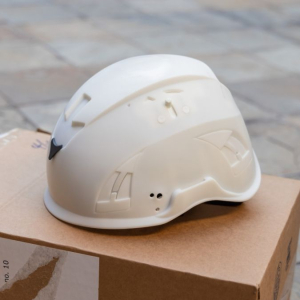
Appearance Prototype

An appearance prototype focuses primarily on the helmet’s visual design.

It can be used to evaluate:

  • Overall shape
  • Proportions
  • Surface geometry
  • Vent design
  • Styling details
  • Logo positioning
  • Color concepts
  • Product presentation

Appearance prototypes are particularly useful during design reviews and before the external styling is finalized.

At this stage, the objective is usually visual evaluation rather than final product performance.

prototyping-02

Structural / Engineering Prototype

A structural prototype focuses more closely on product architecture and dimensional relationships.

Engineers may evaluate:

  • Shell geometry
  • EPS liner geometry
  • Wall thickness
  • Ventilation channels
  • Internal clearances
  • Fit-system interfaces
  • Component locations
  • Strap and buckle integration
  • Accessory interfaces
  • Assembly requirements
  • Manufacturing feasibility

Dimensional accuracy becomes increasingly important at this stage because components must begin working together as a complete system.

prototyping-05

Functional Prototype

A functional helmet prototype is developed to represent the intended product more closely.

Depending on the project, it may include:

  • Outer shell
  • EPS liner
  • Retention system
  • Straps
  • Buckles
  • Padding
  • Visor
  • Accessories
  • Functional components

This allows the development team to evaluate fit, comfort, usability, component interaction and overall product architecture before production tooling is finalized.

Production-Intent Prototype

As the design matures, a more complete production-intent prototype may be developed.

The objective is to get as close as practical to the intended production configuration so that the team can conduct final engineering reviews and prepare for tooling, validation and pilot production.

It is an important bridge between:

Prototype Development → Production Tooling → Pilot Production → Mass Production

Rapid Helmet Prototyping Technologies

Aurora can use different prototyping technologies depending on the required accuracy, material, geometry and development stage.

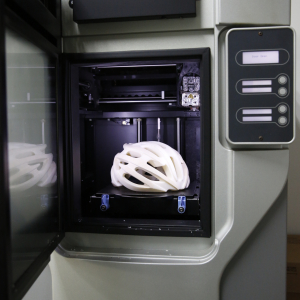
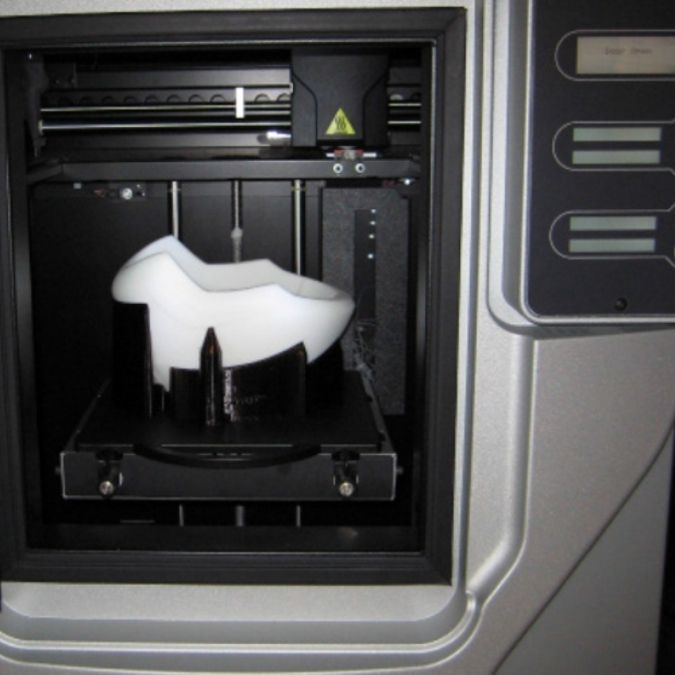
3D Printing

3D printing is particularly useful during early and intermediate product development because design revisions can be converted into physical models relatively quickly.

Applications can include:

  • Concept models
  • Helmet shell mockups
  • Internal structures
  • Fit-system components
  • Accessory concepts
  • Assembly verification
  • Design comparison

Because digital files can be revised between prototype iterations, 3D printing can support a faster design → evaluate → modify → prototype again development cycle.


CNC Machining

For projects requiring greater dimensional accuracy or specific prototype materials, CNC machining can be an important development tool.

CNC prototyping may be used for:

  • Precision helmet components
  • EPS prototype structures
  • Engineering mockups
  • Fit-system components
  • Tooling verification
  • Dimensional validation

CNC machining is particularly useful when the prototype needs to reproduce critical dimensions more accurately than a basic appearance model.


Prototype Tooling

Once the design reaches a more mature stage, prototype or development tooling may be considered to create samples that more closely represent the intended manufacturing process.

This can help teams evaluate:

  • Material behavior
  • Component fit
  • Shell and EPS integration
  • Assembly
  • Surface appearance
  • Manufacturing feasibility

The appropriate prototyping method depends on what needs to be validated before production tooling is released.

Digital Engineering + Physical Prototyping

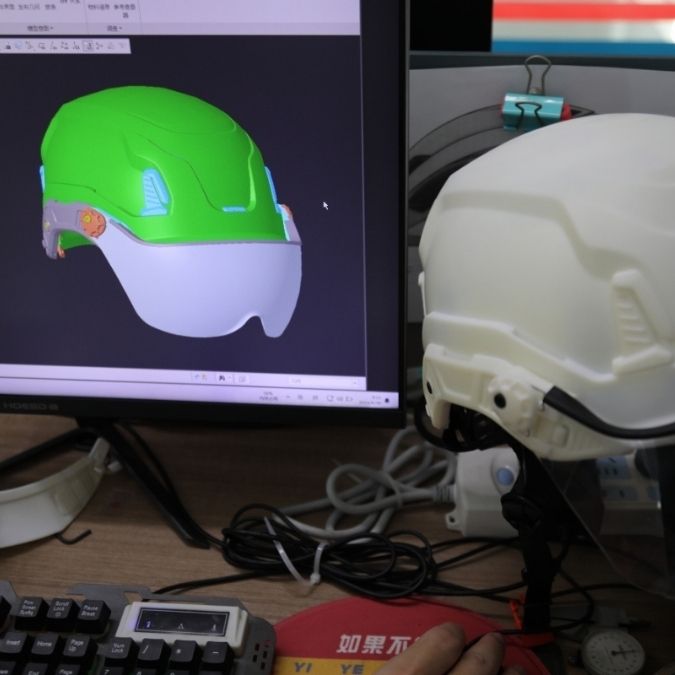
Physical prototyping is most effective when combined with digital engineering.

Before and during prototype development, our engineers can use 3D CAD modeling, dimensional evaluation and engineering analysis to identify potential design issues and evaluate possible improvements.

The development cycle may involve:

CAD Design → Engineering Review → Prototype → Physical Evaluation → Design Modification → New Prototype

Rather than waiting until tooling is complete to discover a problem, this iterative process allows the product to evolve while changes are still comparatively easier to make.


Prototype Testing & Design Refinement

A prototype is not automatically the final product.

During development, engineers may use prototype evaluations to investigate:

  • Fit and comfort
  • Weight distribution
  • Ventilation geometry
  • Component compatibility
  • Retention-system function
  • Accessory integration
  • Structural design
  • Assembly
  • Manufacturing practicality

Aurora’s in-house testing capabilities can also support engineering evaluation during the development process.

Results from prototype reviews and development testing can then be used to identify areas that require further refinement.

An Important Difference: Development Testing vs. Final Certification

Prototype evaluation is a development tool.

Depending on the prototype materials and manufacturing method, a rapid prototype may not represent the mechanical performance of the final production helmet.

Formal product certification should therefore be carried out using appropriate production-representative products and according to the applicable helmet standard and market requirements.

This distinction is an important part of professional helmet development.

Prototyping Is an Iterative Process

Developing a helmet rarely involves producing one prototype and immediately proceeding to mass production.

A typical project may move through several cycles:

Concept Review

Appearance Prototype

Engineering Review

Structural / Functional Prototype

Testing & Evaluation

Design Optimization

Production-Intent Prototype

Tooling

Each stage has a different purpose.

The goal is to learn as much as possible before major tooling and production investments are made.


From Helmet Prototype to Mass Production

Because Aurora provides both product development and manufacturing support, prototyping can connect directly with the later production stages.

Our development process can include:

Product Concept → Industrial Design → CAD Engineering → Rapid Prototyping → CNC Machining → Prototype Evaluation → Testing Support → Design Optimization → DFM → Tooling → Pilot Production → Quality Verification → Mass Production

This connection between design, prototyping and manufacturing is particularly important.

A prototype may look excellent but still contain features that are difficult to mold, assemble, decorate or manufacture consistently.

By involving manufacturing engineers before tooling begins, these issues can be evaluated earlier in the development process.


Our Helmet Prototyping Capabilities

Depending on the project, Aurora can support:

  • Industrial design
  • 3D CAD development
  • Product engineering
  • 3D printing
  • CNC machining
  • Rapid prototyping
  • Appearance prototypes
  • Structural prototypes
  • Functional prototypes
  • Prototype assembly
  • Engineering evaluation
  • Prototype modification
  • Testing support
  • DFM review
  • Tooling preparation
  • Pilot-production support

These capabilities can support both OEM and ODM helmet-development programs.


Helmet Categories We Support

Aurora’s prototyping experience covers a wide range of helmet and protective-product categories, including:

Bicycle & Mobility Helmets

  • Road cycling helmets
  • Mountain bike helmets
  • Gravel helmets
  • E-bike helmets
  • Urban helmets
  • Children’s helmets
  • Scooter helmets

Sports & Outdoor Helmets

  • Skate helmets
  • Snow helmets
  • Equestrian helmets
  • Climbing helmets
  • Water sports helmets
  • Adventure sports helmets

Safety Helmets

  • Industrial safety helmets
  • Construction helmets
  • Work-at-height helmets
  • Specialized occupational helmets

New Product Development

Our development team can also evaluate new concepts involving:

  • Smart helmets
  • Emerging mobility products
  • New protective-equipment concepts
  • Integrated accessories
  • Specialized helmet projects

Why Prototype With Aurora?

Prototyping is most valuable when the team creating the prototype also understands how the final product will be manufactured.

Aurora combines:

Industrial Design + Engineering + CAD + 3D Printing + CNC + Prototyping + Testing Support + Tooling + Manufacturing

This integrated approach allows our engineers to consider both the immediate prototype and the long-term production requirements of the product.

The result is a more practical development objective:

Not just a prototype that looks right—but a helmet designed with production in mind.


Start Your Helmet Development Project

Have a new helmet concept or product under development?

Start by sharing a general overview of the helmet category, target market and development objectives. Our team can then discuss an appropriate prototyping and development approach.

For confidential projects involving proprietary designs, new technologies or intellectual property, an NDA can be established before CAD models, drawings, samples or other confidential technical information are shared.

Talk to Aurora Sports about your next helmet prototyping and product-development project.