Impact Management Systems
Mips® Helmet Safety Technology
Designed to Help Manage Rotational Motion
Many real-world helmet impacts occur at an angle rather than perfectly straight.
An angled impact can create rotational motion of the head in addition to the direct impact forces normally considered in helmet design.
The Mips® safety system is designed to provide additional helmet safety by helping reduce rotational motion that may otherwise be transferred to the user’s head during certain angled impacts.

How Does the Mips® Safety System Work?
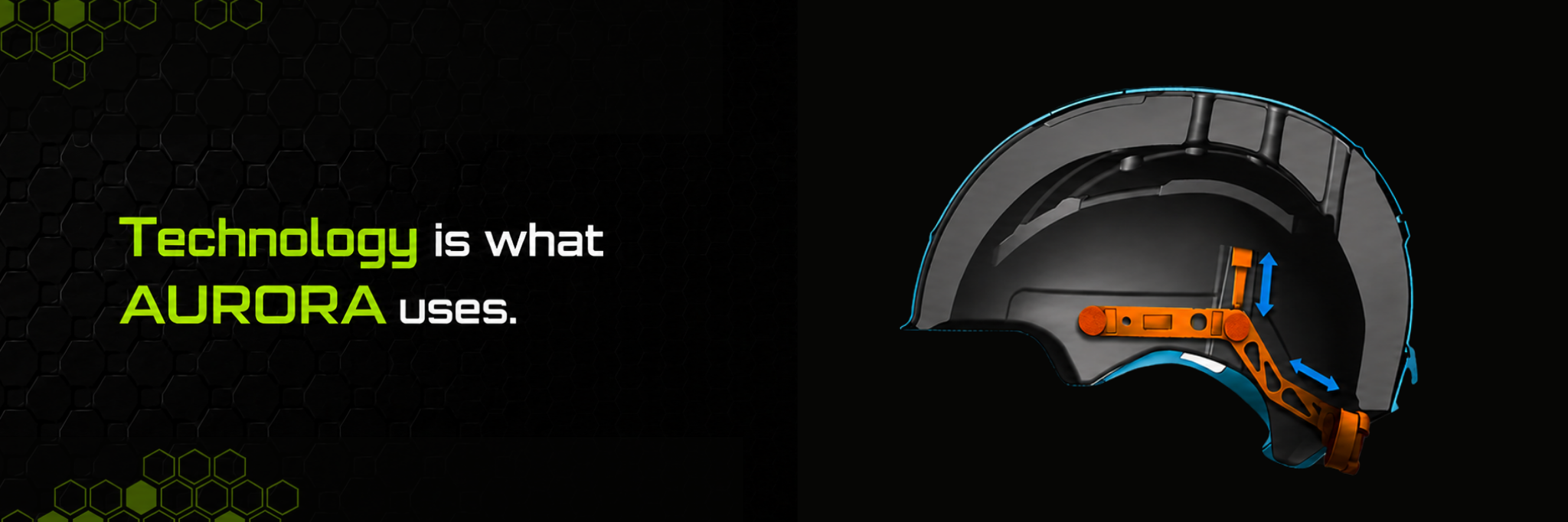
The Mips® safety system incorporates a low-friction layer within the helmet.
During certain impacts, this system is designed to allow a small amount of movement inside the helmet, helping redirect rotational motion away from the head.
Depending on the helmet design and application, Mips offers different system configurations that can be integrated into the helmet while considering important factors such as:
- Helmet construction
- EPS liner geometry
- Ventilation
- Fit and comfort
- Retention systems
- Weight
- Intended helmet application
Mips® technology is currently used across multiple helmet categories, including bicycle, snow, motorcycle, equestrian, climbing and industrial safety helmets.
Integrating Mips® Into a New Helmet
Mips® is a proprietary helmet safety technology developed and managed by Mips AB.
For brands interested in developing a new helmet with the Mips® safety system, we recommend contacting Mips directly for official engineering support, system selection, integration requirements, testing and approval.
Mips engineers work with helmet brands to integrate the appropriate system into individual helmet designs and conduct testing to verify that the completed integration meets Mips requirements.
Aurora Helmet Development & Manufacturing
Aurora Sports can support the surrounding helmet development and manufacturing process, including:
Industrial Design → Engineering → Prototyping → Tooling → EPS In-Mold Manufacturing → Plastic Injection → Assembly → Testing Support → Mass Production
When a customer chooses to incorporate Mips® technology, our engineering and manufacturing teams can work with the helmet design according to the integration specifications approved by Mips.
For Mips® technology selection, engineering integration and authorization, please contact Mips directly.
For custom helmet design, tooling and OEM/ODM manufacturing, contact Aurora Sports.
IRF™ Integrated Reinforcement Frame Technology
Strength From Within
Modern bicycle helmet design is a constant balance between protection, weight, ventilation and structural integrity. Large ventilation openings can improve airflow and reduce weight, but they also place greater demands on the internal structure of the helmet.
Aurora’s IRF™ Integrated Reinforcement Frame Technology is engineered to address this challenge from within.
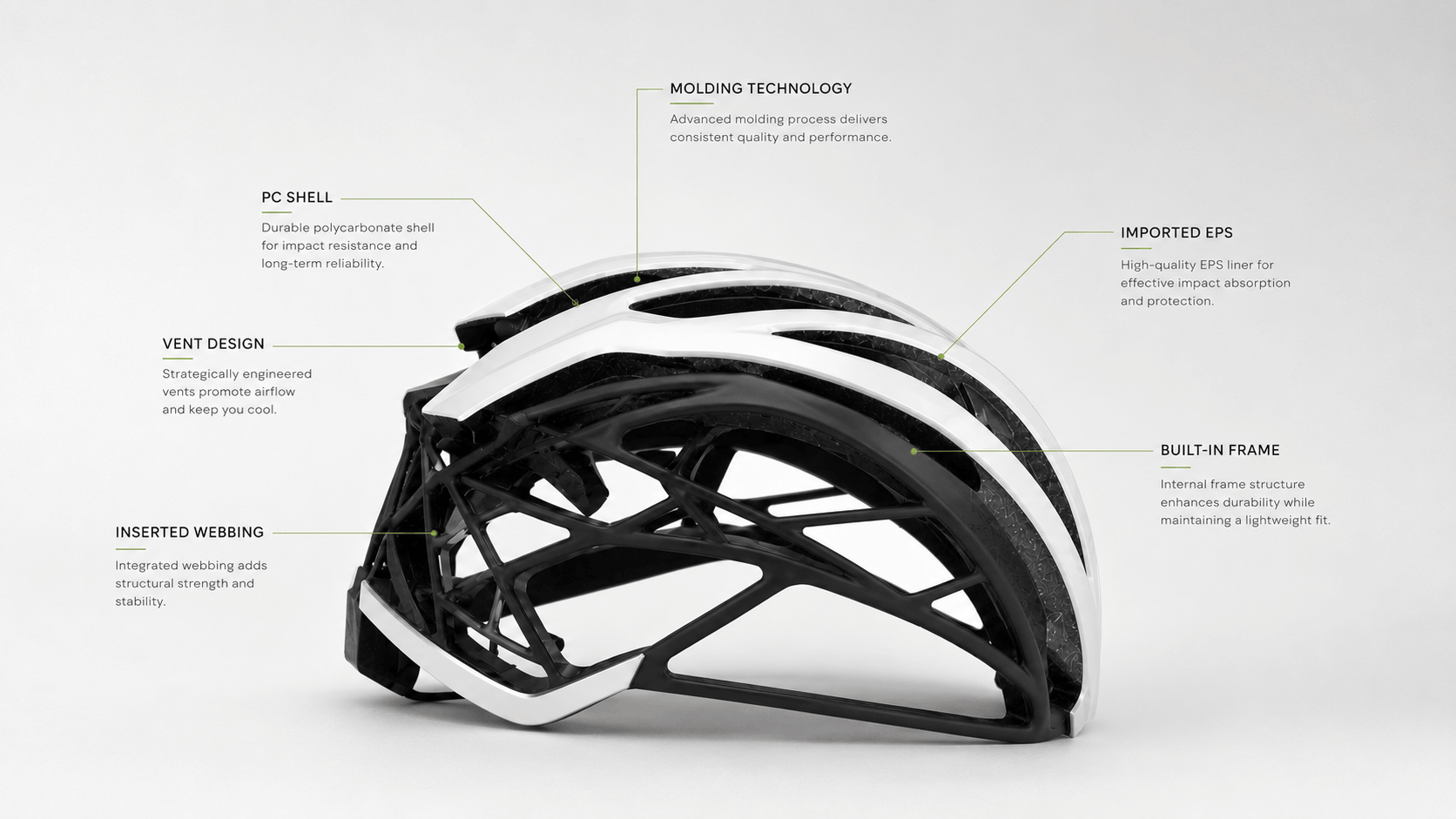
A lightweight internal reinforcement frame is integrated into the helmet’s EPS liner during the manufacturing process, creating a supporting structure throughout critical areas of the helmet. The result is a highly ventilated, lightweight bicycle helmet construction with additional structural support where it matters.
What Is an Integrated Reinforcement Frame?
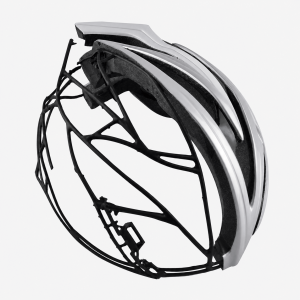
IRF™ is an engineered internal framework incorporated directly into the EPS impact-absorbing liner of the bicycle helmet.
Instead of relying only on the EPS foam and outer shell to maintain the helmet’s structure, the reinforcement frame creates an additional internal network connecting key areas of the helmet.
Think of it as the skeleton inside the helmet.
The frame is designed to work together with the EPS liner and outer shell as an integrated structure while adding minimal unnecessary weight.
Engineered for Lightweight Helmet Design
Weight is one of the most important considerations in performance cycling helmets.
Simply adding more material can increase structural strength, but it can also make a helmet heavier and less comfortable during long rides.
IRF™ takes a different approach.
By reinforcing selected areas within the helmet, designers can optimize the surrounding EPS structure and create an efficient balance between:
- Structural reinforcement
- Low helmet weight
- Large ventilation channels
- Comfortable all-day wear
- Performance-oriented helmet design
This makes Integrated Reinforcement Frame Technology particularly suitable for modern road cycling helmets, mountain bike helmets and other performance bicycle helmets where ventilation and low weight are priorities.
Designed Around Better Ventilation
High-performance bicycle helmets often feature large front vents, deep internal air channels and open rear exhaust ports.
These openings improve airflow, but they also remove material from the EPS liner.
The internal reinforcement frame provides additional structural support around these highly ventilated areas, giving helmet designers greater flexibility when developing lightweight, aerodynamic and well-ventilated cycling helmets.
The objective is simple:
More intelligent structure instead of simply more material.
Integrated Directly Into the EPS Liner
During helmet manufacturing, the reinforcement frame is positioned within the mold and integrated with the EPS liner as the helmet is formed.
This process creates a unified structure rather than adding a reinforcement component after molding.
The internal frame becomes part of the helmet architecture, working together with the EPS liner and in-mold outer shell.
This integrated construction also allows the reinforcement structure to follow the shape of the helmet precisely and support areas identified during the design and engineering process.