PC Helmet Shell Painting & Coating Processes: A Complete Guide
The appearance of a polycarbonate (PC) helmet shell involves much more than simply spraying a layer of paint. Professional helmet shell painting and coating usually requires multiple stages to achieve the desired color, texture, graphics, durability, and overall product quality.
For helmet manufacturers, distributors, brands, and OEM buyers, understanding the different helmet coating processes can help when selecting the right finish for a new helmet project.
In general, PC helmet finishing can be divided into two main areas:
- Surface coating and finishing effects — including glossy, matte, soft-touch, metallic, gradient, and chameleon finishes.
- Graphic application methods — including screen printing, water-slide decals, and other decorative processes.
The final coating system is selected according to the helmet design, production quantity, target market, durability requirements, and desired price level.
1. Glossy Helmet Finish
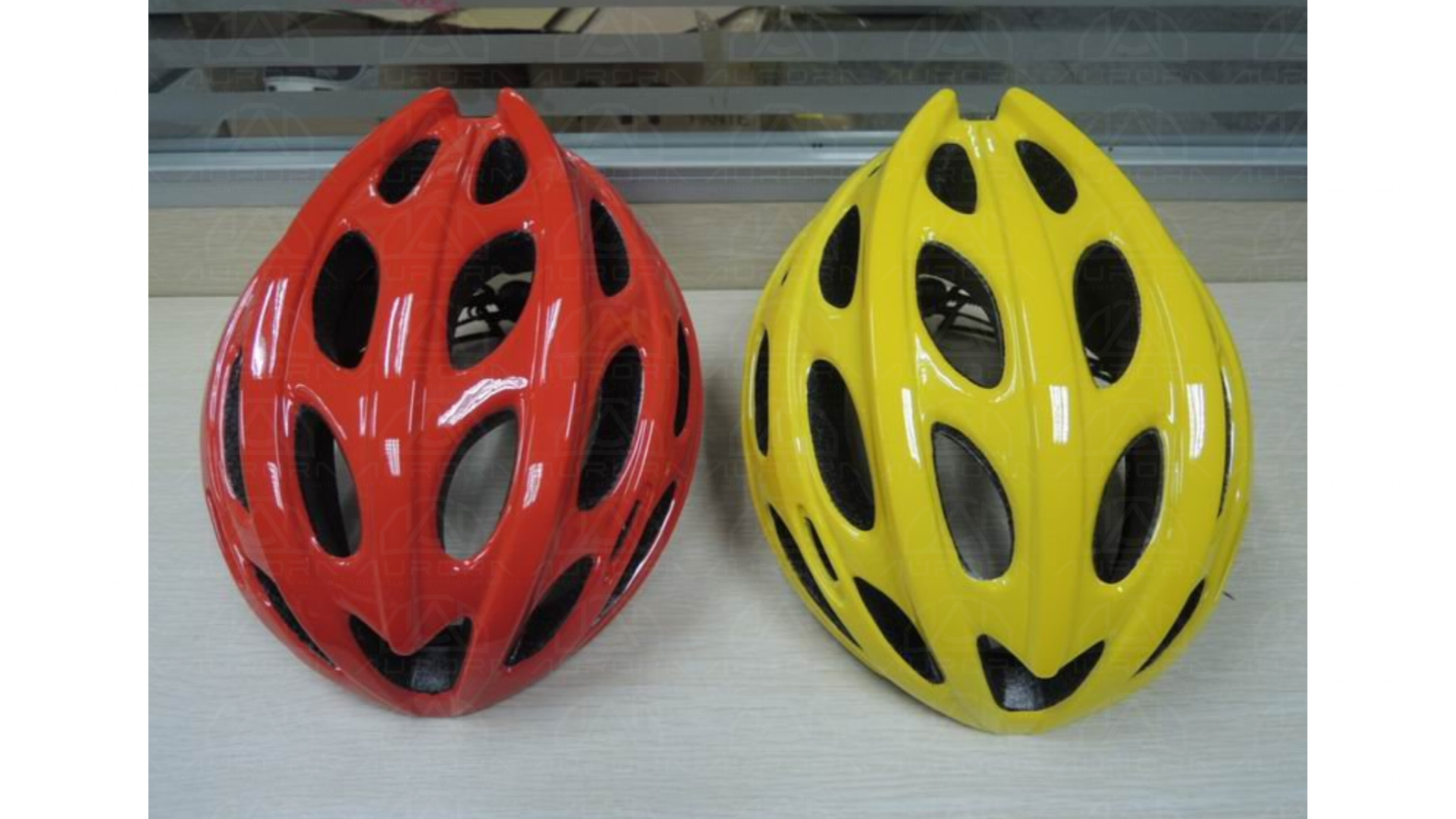
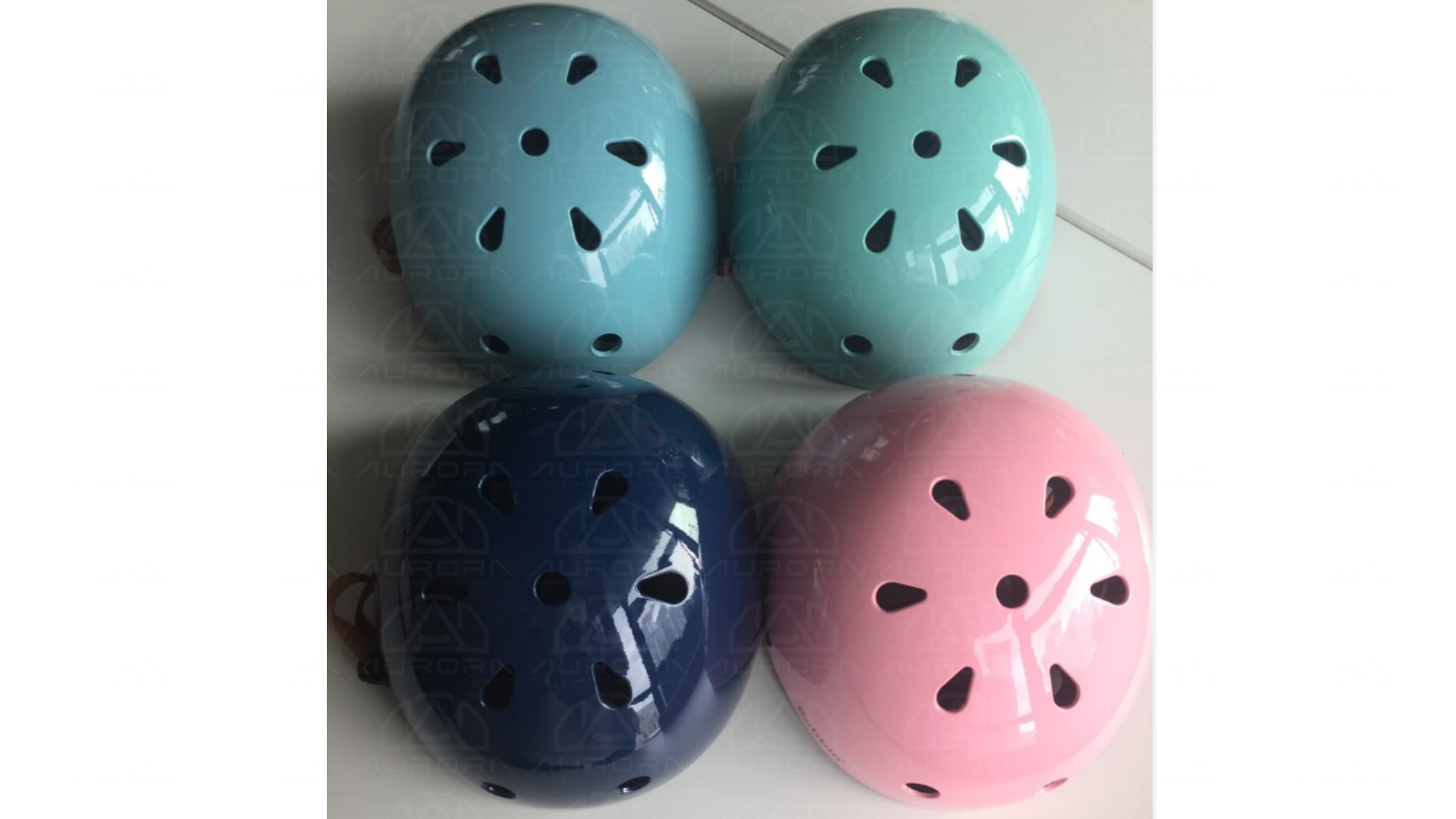
A glossy helmet finish creates a smooth, highly reflective surface that gives the helmet a bright and polished appearance.
Glossy coatings can increase the visual depth of colors and make printed graphics appear more vivid.
Advantages of a Glossy Helmet Coating
- Bright and premium appearance
- Strong color saturation
- Easy to wipe and clean
- Suitable for logos and decorative graphics
- Minor surface scratches may sometimes be polished
Points to Consider
Glossy surfaces tend to show fingerprints, dust, scuffs, and scratches more clearly, particularly under strong lighting.
PC helmet shells naturally have a relatively glossy appearance after injection molding. Depending on the required design, this surface may sometimes remain visible. However, painted or decorated helmets normally require additional coating layers for appearance and protection.
2. Matte Helmet Finish
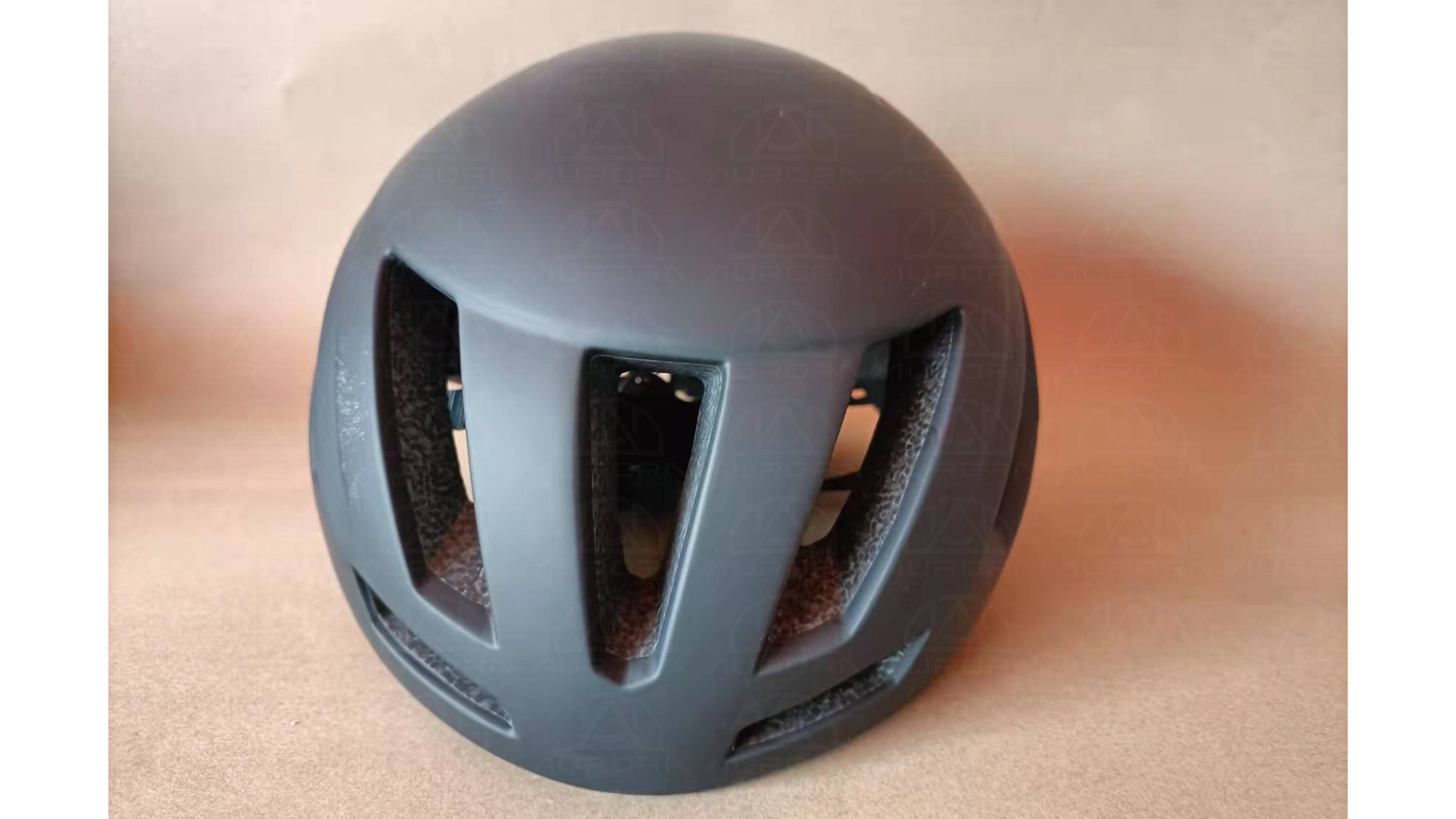
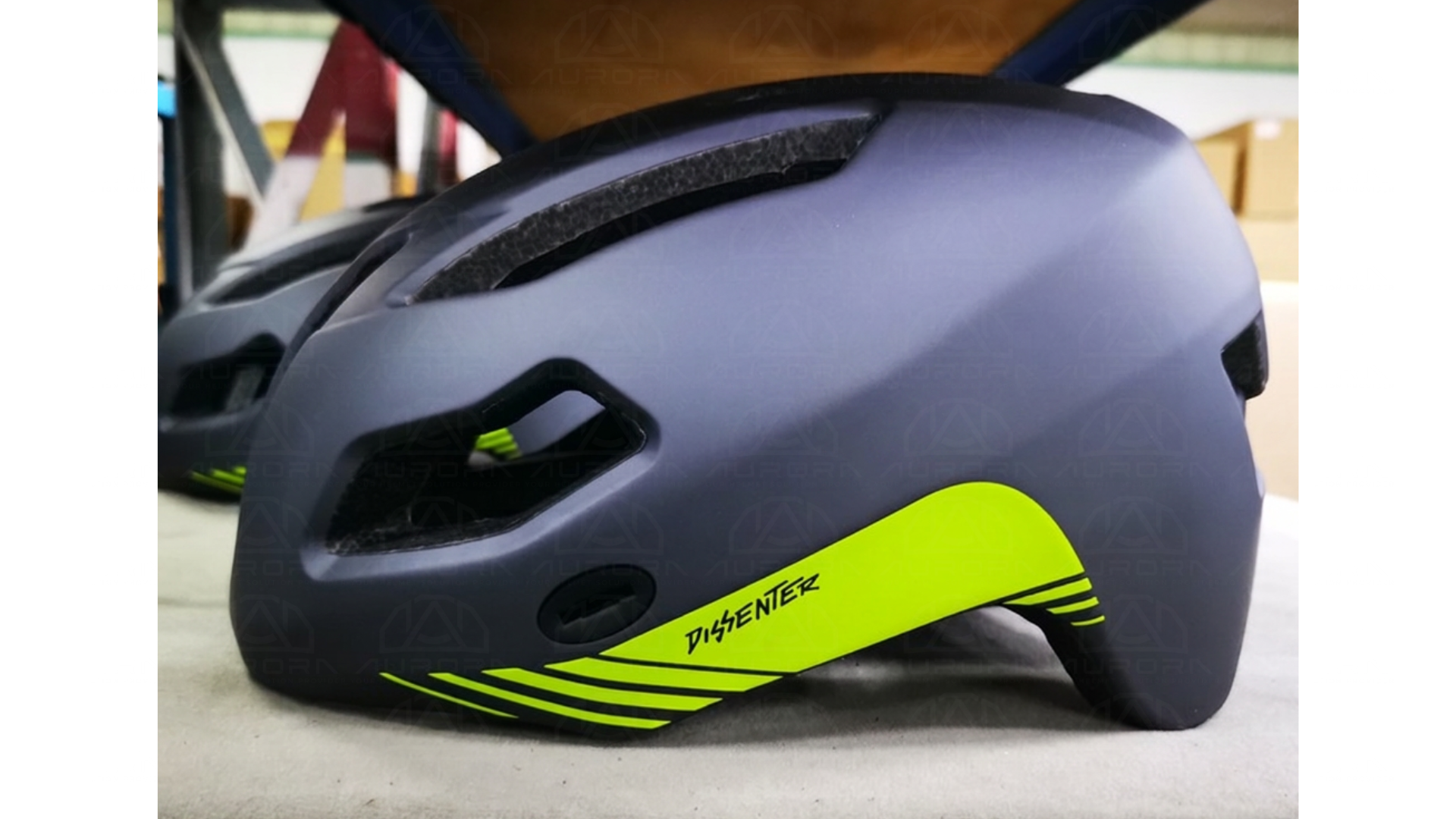
A matte helmet coating produces a low-reflection surface that diffuses light rather than reflecting it.
This creates a modern, understated appearance that is popular for industrial helmets, sports helmets, outdoor helmets, and premium safety equipment.
Advantages of Matte Helmet Finishes
- Modern and professional appearance
- Reduced light reflection
- Minor scuffs can be less noticeable
- Suitable for understated or premium product designs
Maintenance Considerations
Matte surfaces can be sensitive to oils, fingerprints, aggressive cleaners, and excessive rubbing.
Unlike glossy coatings, matte finishes generally should not be polished because polishing can change the surface texture and create permanently shiny areas.
As a result, repairing a damaged matte helmet coating can be more difficult than repairing a glossy surface.
3. Soft-Touch and Rubberized Helmet Coatings
A soft-touch helmet coating, sometimes referred to as rubber paint or rubberized coating, gives the helmet a smooth, slightly elastic surface with a distinctive tactile feel.
This finish is often used when manufacturers want to create a more premium product experience.
Benefits of Soft-Touch Helmet Coatings
- Comfortable tactile feel
- Improved grip
- Premium matte appearance
- Differentiates the product from standard painted helmets
Soft-touch coatings generally cost more than conventional paint and require tighter control of surface preparation, coating thickness, spraying, and curing.
Depending on the paint formulation, different degrees of elasticity and softness can be achieved.
Graphic Application Methods for PC Helmet Shells
After the base coating has been completed, logos, patterns, branding, and other decorative graphics can be applied.
The most appropriate helmet printing method depends largely on the complexity of the artwork and the production quantity.
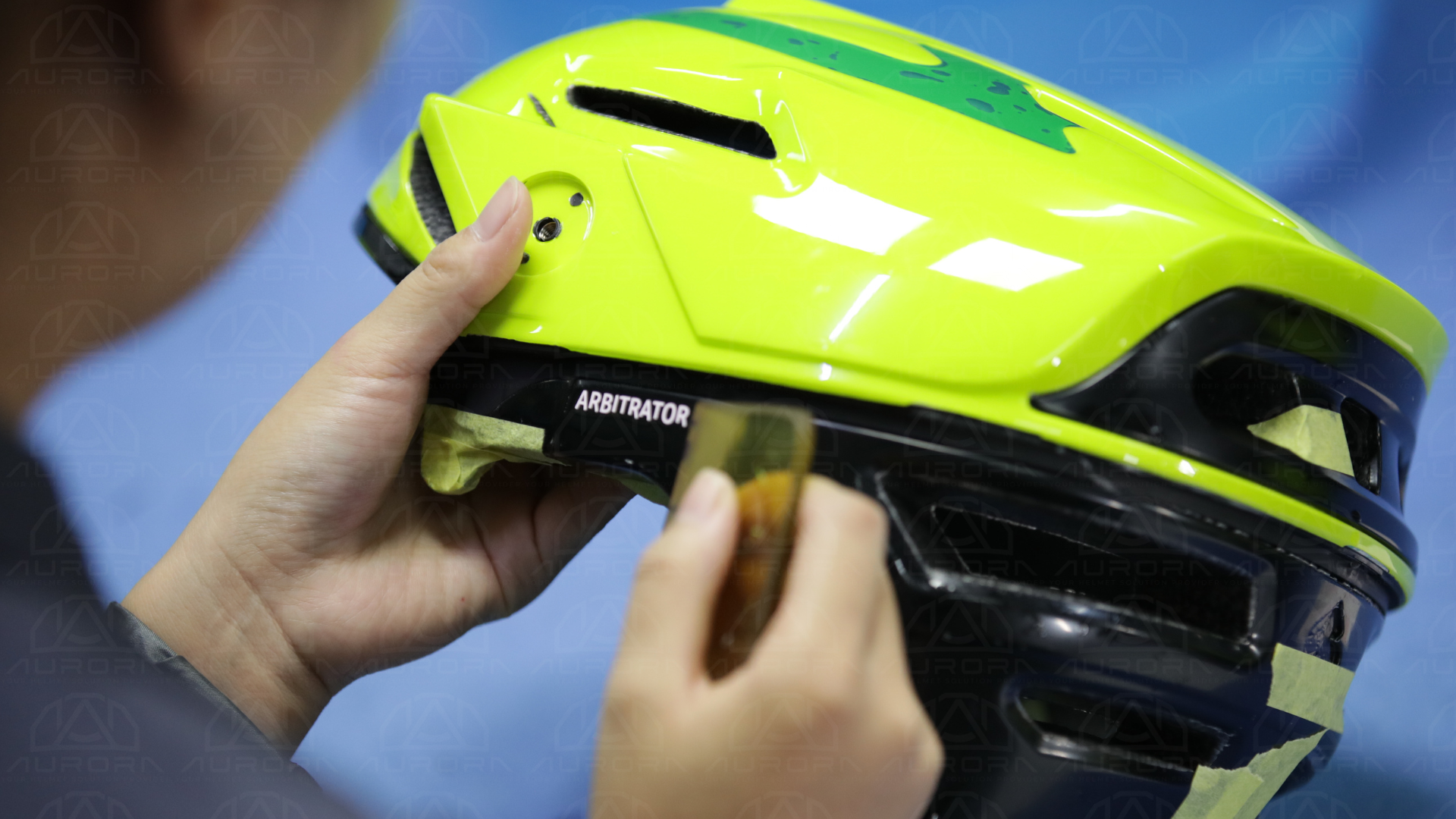
4. Water-Slide Decals for Helmet Graphics
Water-slide decals are suitable for applying detailed, multi-color graphics to curved helmet surfaces.
They are particularly useful when the design includes intricate artwork that would be difficult to reproduce through conventional screen printing.
Typical Water-Slide Decal Process
Step 1: Surface Preparation
The helmet shell must be thoroughly cleaned and prepared to ensure good adhesion.
Matte or textured surfaces may require additional attention because reduced surface contact can make decal application more challenging.
Step 2: Decal Transfer
The printed decal is placed in water until the decorative film can separate from its backing paper.
It is then carefully positioned on the PC helmet shell.
Step 3: Removal of Water and Air
A flexible tool is used to remove trapped water and air bubbles and ensure that the decal conforms to the helmet’s curved surface.
Step 4: Drying
The decal is allowed to dry fully before subsequent coating operations.
Why a Protective Clearcoat Is Important
A water-slide decal normally requires a suitable protective clearcoat.
The clearcoat helps protect the helmet graphics from:
- UV exposure
- Abrasion
- Scratching
- Chemicals
- Moisture
- General handling and wear
It also helps integrate the graphic with the surrounding coating, creating a smoother and more professional finished appearance.
5. Screen Printing on Helmet Shells
Helmet screen printing is one of the most practical methods for applying simple logos, text, symbols, and limited-color graphics.
Ink is transferred directly onto the helmet surface through a prepared mesh screen.
Screen Printing Is Suitable For:
- Company logos
- Brand names
- Warning symbols
- Simple text
- One-color designs
- Limited-color graphics
- High-volume helmet production
Advantages
- Cost-effective for repetitive production
- Consistent results
- Efficient for mass production
- Suitable for OEM branding
However, screen printing is generally less suitable for photographic images, highly detailed artwork, or complicated multi-color gradients.
The durability of printed graphics depends on the ink system, surface preparation, curing conditions, and any subsequent protective coating.
6. Chameleon and Color-Shift Helmet Paint
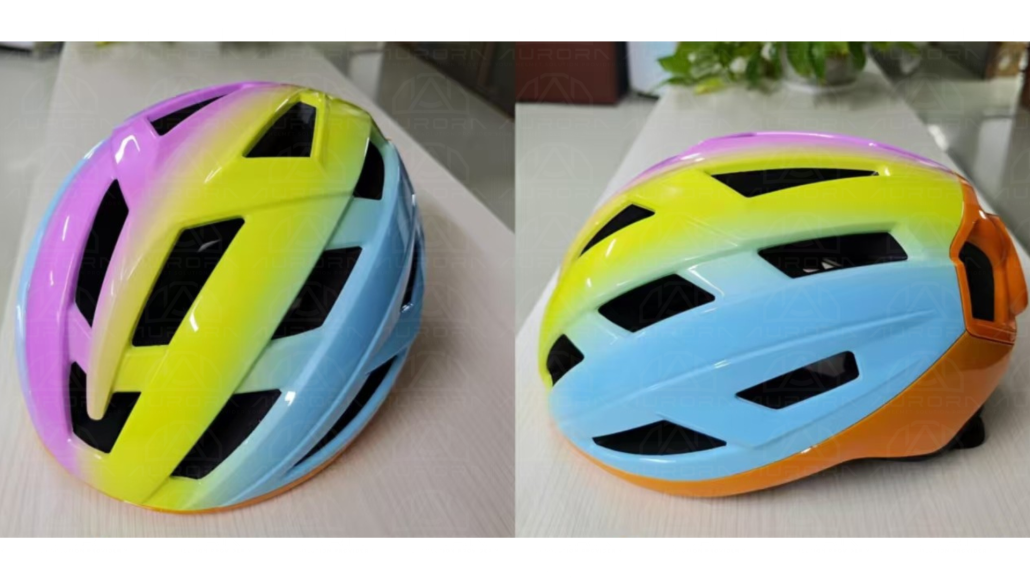
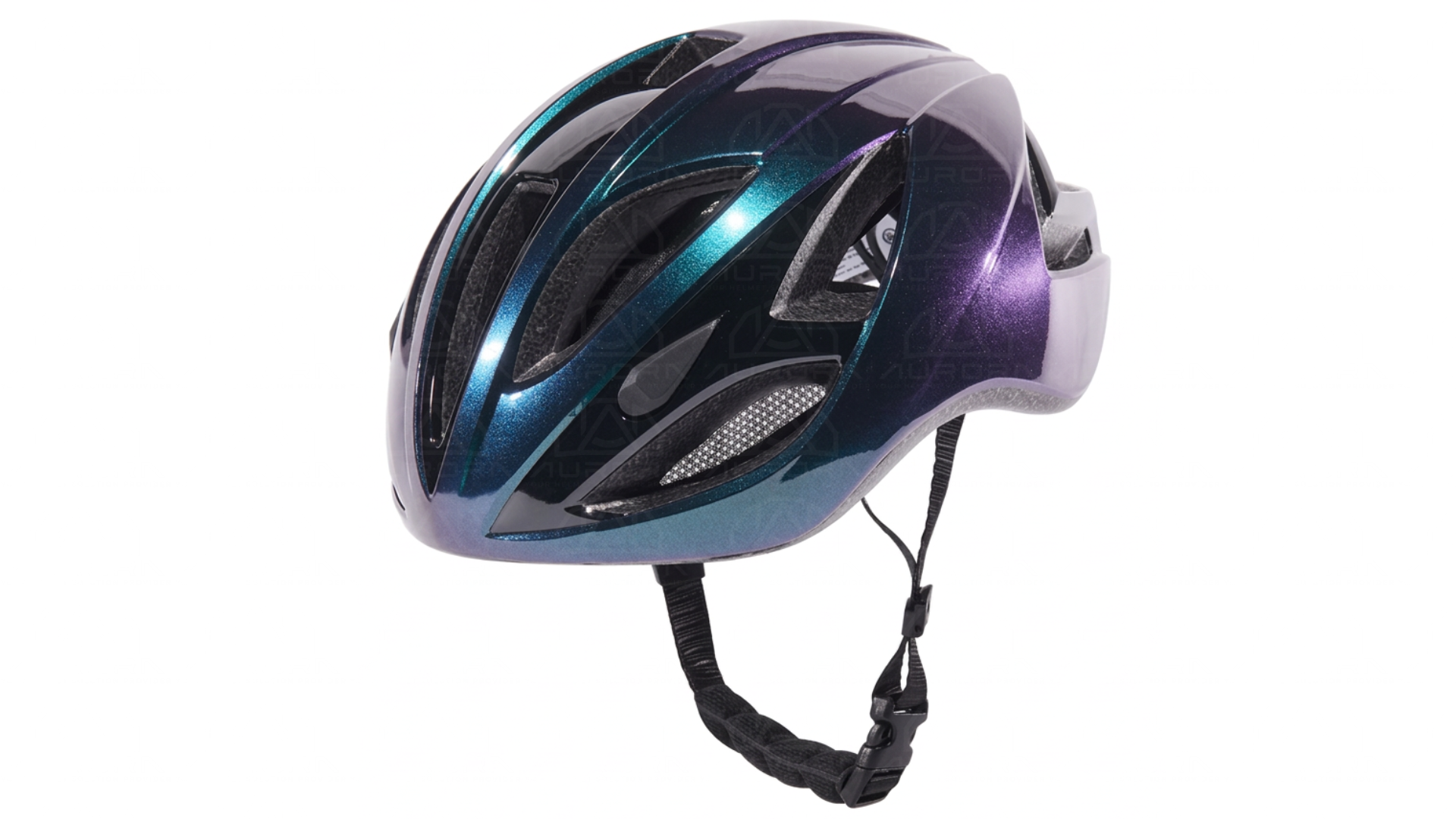
A chameleon helmet finish, also known as a color-shift coating, creates one of the most visually distinctive effects available for PC helmet shells.
Depending on the viewing angle and lighting, the surface appears to shift between different colors.
This effect is commonly used for premium or highly customized helmet designs.
Typical Chameleon Helmet Painting Process
Step 1: Dark Basecoat
A black or other dark basecoat is commonly applied first.
The dark background increases contrast and allows the special-effect pigments to produce a stronger color-changing appearance.
Step 2: Chameleon Paint
Several thin layers of specialized pearlescent or interference-effect paint are sprayed over the basecoat.
These pigments reflect light differently according to the viewing angle, creating the characteristic color-shift effect.
Step 3: Protective Clearcoat
A transparent clearcoat is then applied.
In addition to protecting the special-effect paint, the clearcoat increases visual depth and can make the color-changing effect appear richer and more pronounced.
Why Chameleon Coatings Cost More
Compared with standard solid colors, chameleon helmet finishes require:
- Specialized pigments
- More expensive coating materials
- Multiple paint layers
- Accurate spraying
- Experienced operators
- Additional quality control
For this reason, chameleon coatings are usually offered as a premium helmet customization option.
7. Protective Clearcoat for Helmet Shells
A helmet clearcoat is one of the most important stages in many professional PC helmet finishing systems.
It is applied over the underlying paint, graphics, or decorative effect to provide both protection and the desired final appearance.
Main Functions of a Helmet Clearcoat
UV Protection
Helps reduce deterioration and fading caused by sunlight.
Abrasion Resistance
Protects the underlying paint and graphics from normal handling and wear.
Graphic Protection
Helps seal printed graphics and decals beneath a protective layer.
Surface Integration
Creates a more uniform surface between graphics and surrounding paint.
Appearance Control
Different clearcoat formulations can create:
- High-gloss finishes
- Semi-gloss finishes
- Satin finishes
- Matte finishes
The clearcoat therefore plays both a protective and decorative role in the overall helmet coating process.
Matte vs. Glossy Helmet Finish: Which Is Better?
There is no universal answer. The best choice depends on the desired appearance, maintenance requirements, application environment, and target customer.
| Feature | Matte Helmet Finish | Glossy Helmet Finish |
|---|---|---|
| Appearance | Modern, understated and low-reflection | Bright, vivid and highly reflective |
| Minor Scuffs | Often less noticeable | Usually more visible |
| Scratches | Difficult to polish or locally repair | Minor scratches may sometimes be polished |
| Fingerprints | Oils can produce noticeable marks | Fingerprints are visible but usually easier to clean |
| Cleaning | Requires careful cleaning | Generally easier to maintain |
| Polishing | Usually not recommended | Often possible |
| Repairability | More difficult to blend locally | Generally easier for minor surface defects |
| Best For | Modern, tactical and understated designs | Bright, colorful and graphic-heavy designs |
Neither finish is automatically more durable. Performance depends heavily on the quality of the coating system, material compatibility, surface preparation, curing, and production control.
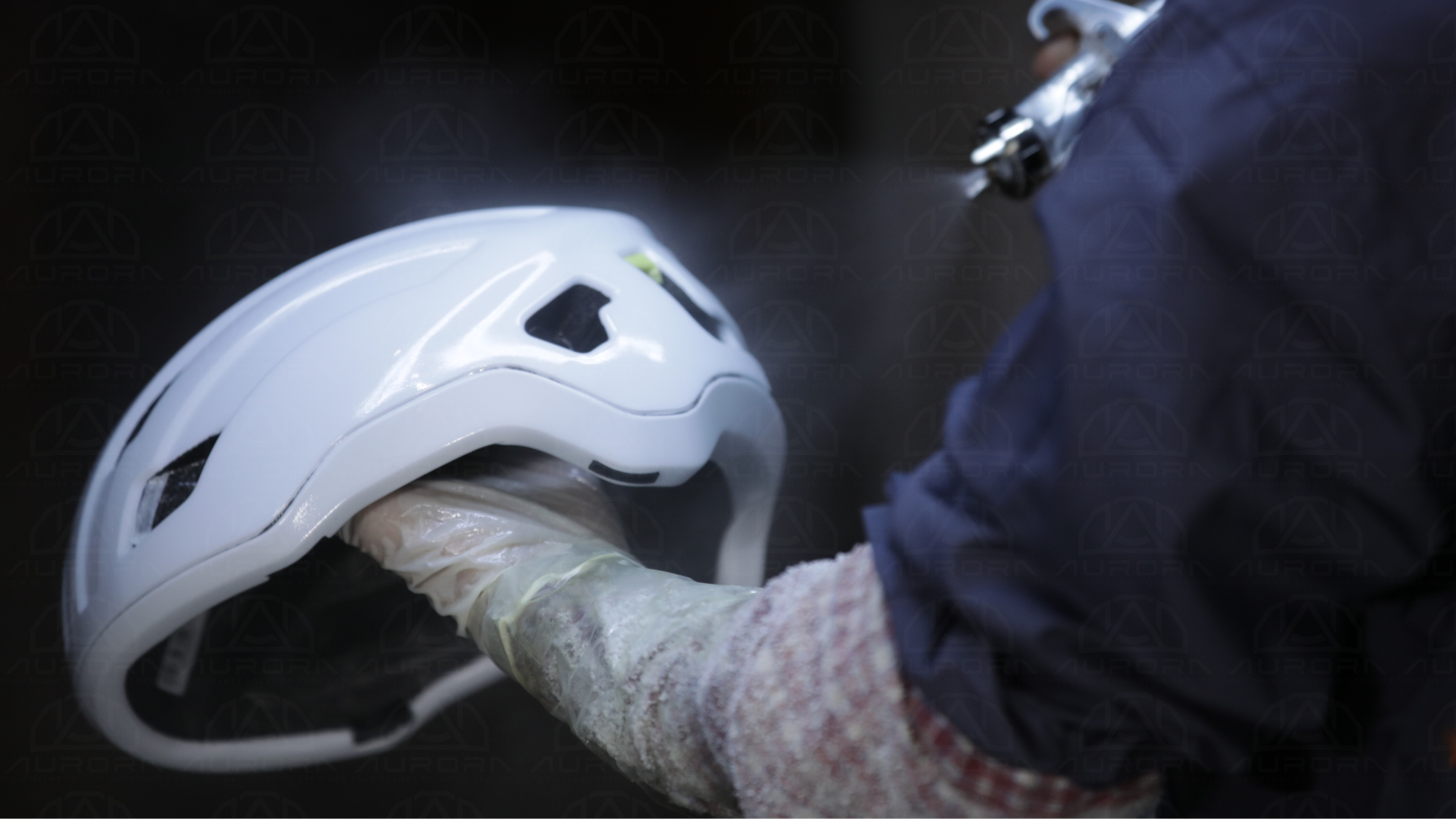
How a Professional PC Helmet Painting Process Works
A typical PC helmet shell painting process can include the following stages:
1. PC Shell Preparation
The molded helmet shell is cleaned and prepared so that subsequent coatings can adhere correctly.
2. Basecoat Application
A solid color, matte paint, soft-touch coating, metallic effect, or other base finish is sprayed onto the helmet.
3. Graphic Application
Logos and decorative designs can then be added through screen printing, water-slide decals, or other suitable methods.
4. Special-Effect Coating
Pearlescent, chameleon, gradient, or other specialty finishes can be added when required.
5. Protective Clearcoat
A transparent topcoat may be applied to protect the underlying decorative layers and create the required glossy, satin, or matte appearance.
6. Inspection and Quality Control
The finished helmet shell should be checked for coating consistency, color accuracy, graphic positioning, surface defects, and overall appearance.
Choosing the Right Helmet Shell Coating Process
For an OEM or custom helmet project, the best finishing solution depends on several factors:
- Helmet shell material
- Desired appearance
- Logo and graphic complexity
- Production quantity
- Required durability
- Target market
- Product positioning
- Budget
- Manufacturing lead time
For example, screen printing may be ideal for a simple company logo on a large production order, while water-slide decals may be more appropriate for detailed graphics. A soft-touch finish can create a premium tactile experience, while a chameleon coating provides a distinctive high-end appearance.
The best solution is therefore not necessarily the most complicated coating process, but the process that balances design, cost, durability, manufacturability, and market requirements.
Different Applications Require Different Helmet Shells
PC shells are commonly chosen when a helmet needs to be lightweight, aerodynamic and closely integrated with an EPS impact liner. Their ability to be formed into thin, detailed shapes makes them especially useful for bicycle helmets, short-track speed-skating helmets, some equestrian helmets and selected sections of snowboarding helmets.
For applications that call for a thicker, more rigid and rugged outer shell, injection-molded ABS may be more appropriate. ABS is frequently used in industrial safety helmets, some equestrian helmets, some snowboarding helmets and other demanding environments.
The right material depends on the helmet’s complete construction, intended activity and required testing standard. Aurora Sports can help brands evaluate PC, ABS and combined shell designs to determine the best solution for each OEM or ODM helmet project.
Frequently Asked Questions About Helmet Painting and Coating
Can a polycarbonate helmet shell be painted?
Yes. PC helmet shells can be painted using an appropriate coating system designed to be compatible with polycarbonate. Correct material selection and process control are important because unsuitable chemicals or coatings can potentially affect PC material performance.
What is the difference between matte and glossy helmet coatings?
Glossy finishes reflect more light and create brighter, deeper colors, while matte finishes diffuse light and create a softer, non-reflective appearance. They also have different cleaning and repair requirements.
Can logos be printed directly onto helmet shells?
Yes. Simple logos and text can often be applied using screen printing or other direct-printing methods. More complicated artwork may require decals or other decorative processes.
Does a helmet decal need a clearcoat?
For professional water-slide decal applications, a compatible protective topcoat is normally used to seal and protect the graphic against wear and environmental exposure.
What is a chameleon helmet finish?
A chameleon or color-shift finish uses special-effect pigments that display different colors depending on viewing angle and lighting conditions. It normally involves a dark basecoat, color-shift paint, and protective clearcoat.
Conclusion
The quality of a PC helmet shell finish depends on much more than color alone. Surface preparation, paint compatibility, graphic application, curing, coating thickness, clearcoat selection, and quality control all contribute to the final result.
From glossy and matte helmet finishes to soft-touch coatings, screen printing, water-slide decals, and chameleon paint, each process has its own advantages, limitations, and cost considerations.
For helmet brands, distributors, and OEM buyers, understanding these processes makes it easier to select a finishing solution that provides the right balance of appearance, durability, production efficiency, and cost.
Contact Us:
📱: +1 (657) 762-7550


