How Custom Helmet Padding Is Made: From 2D/3D Design to Production
Good helmet padding is more than a flat piece of foam covered with fabric. The inside of a helmet is a curved, three-dimensional space, so the padding needs to be engineered around the helmet’s geometry, ventilation, fit system, attachment points, and intended use.
At Aurora Sports, we develop custom helmet padding from 3D design through tooling, forming, prototype evaluation, and mass production.
From a Flat Pattern to a Three-Dimensional Fit
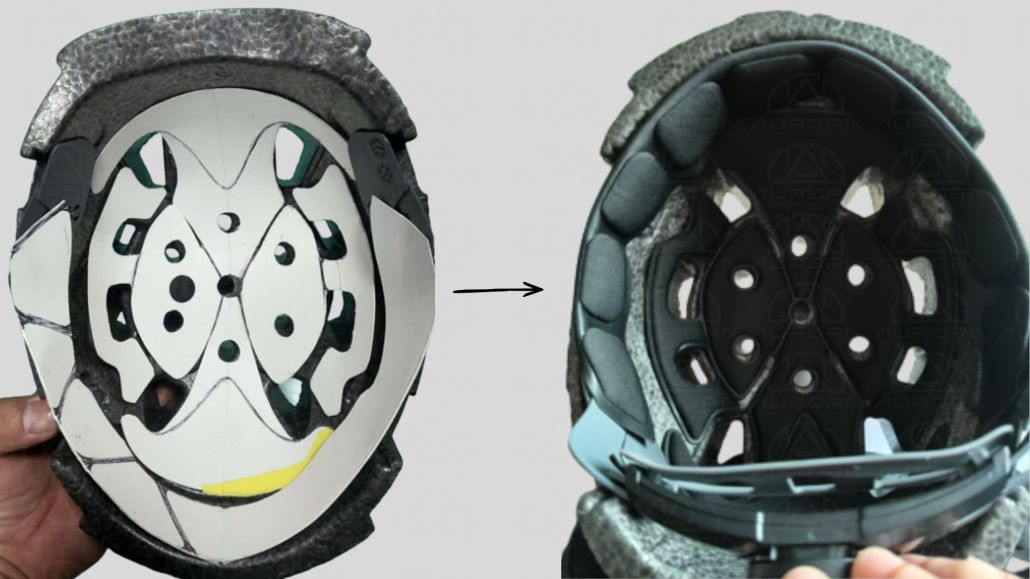
One of the biggest challenges in helmet padding development is making flat foam and fabric conform naturally to a curved helmet interior.
If the cutting pattern or padding shape is not designed correctly, the finished liner can wrinkle, bunch at the edges, lift away from the shell, interfere with ventilation, or create uneven contact with the wearer’s head.
For simpler designs, Aurora can improve the cutting pattern by adjusting curves, openings, and relief cuts so the padding follows the helmet more naturally.
For more complex helmet interiors, we can develop custom three-dimensional formed padding.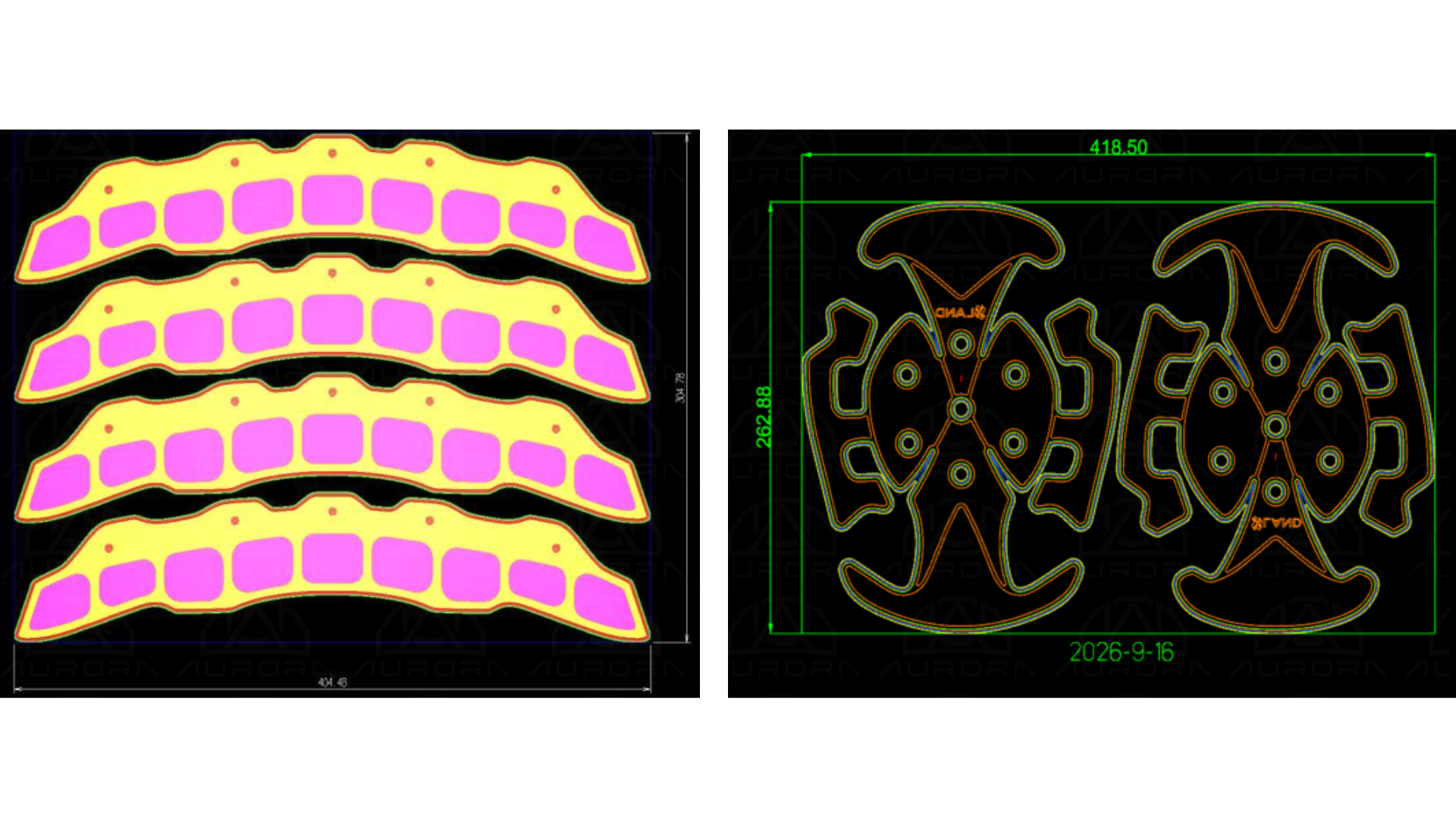
3D Padding Design
The process can begin directly from the helmet’s 3D CAD data.
Our team develops the padding geometry around the internal shell contours, head-contact areas, ventilation openings, fit-system components, straps, and attachment locations.
Designing the padding in 3D allows us to evaluate fit and component clearances before production tooling is created.
This is especially useful when the padding includes contoured cushioning areas, ventilation channels, multiple thickness zones, or complex internal geometry.
Custom CNC Tooling
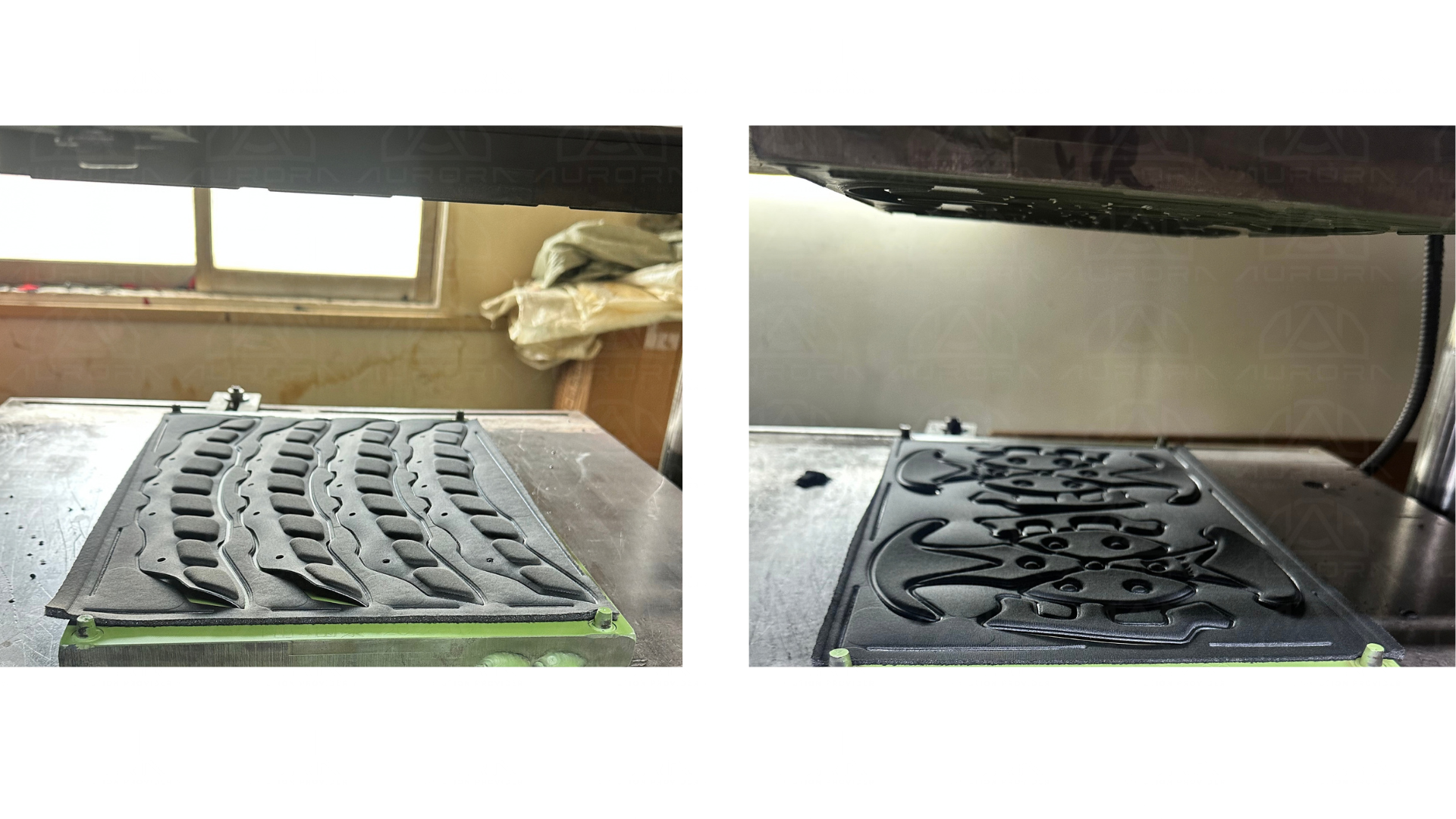
Once the padding design is approved, dedicated forming molds can be produced using CNC machining.
The tooling is designed to reproduce the required curves, raised areas, recessed zones, channels, and other three-dimensional details of the padding.
Accurate tooling helps improve both the appearance of the finished component and production consistency from one piece to the next.
Heat-Forming the Helmet Padding
The selected foam, fabric, or laminated material construction is positioned in the forming mold.
Using controlled temperature, pressure, and forming time, the material is shaped into the required three-dimensional geometry.
Instead of forcing flat padding into the helmet during assembly, the formed component is already designed to follow the helmet’s internal shape.
Depending on the project, custom formed helmet padding may include:
-
Contoured head-contact areas
-
Raised cushioning zones
-
Ventilation openings and channels
-
Defined perimeter edges
-
Multiple thickness areas
-
Fit-system clearances
-
Integrated attachment locations
After forming, the padding is cooled and stabilized before moving to finishing.
Trimming, Sewing and Attachment
The formed padding may then require additional finishing operations such as trimming, ventilation cutting, edge finishing, sewing, lamination, backing installation, and hook-and-loop attachment.
Small details can make a significant difference.
For example, hook-and-loop pieces that are too large may extend beyond the padding and contact the wearer’s hair or skin. If they are too small or incorrectly positioned, the padding may shift during use.
Aurora can optimize the size, shape, and placement of helmet padding attachment points to create a cleaner and more secure interior.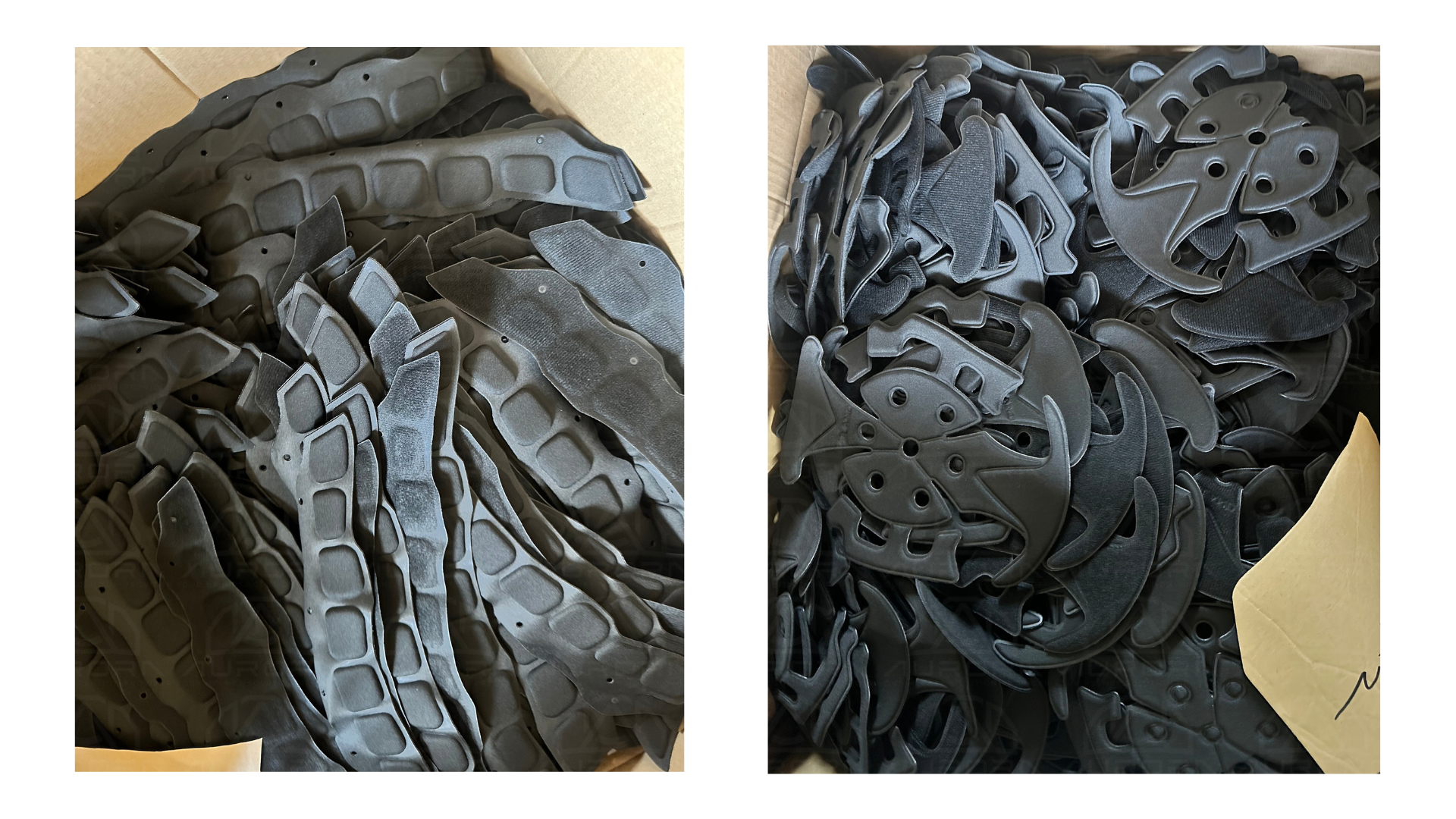
Reducing Wrinkles Through Better Pattern Design
Not every improvement requires new tooling.
Sometimes refining the original cutting pattern can significantly improve the finished result.
By comparing the existing pattern with an updated version, Aurora can adjust curves, openings, and relief areas so the material follows the helmet geometry more naturally.
Better pattern → better conformity → fewer wrinkles → cleaner helmet interior
A cleaner fit can also improve padding positioning, ventilation alignment, comfort, and assembly consistency.
Prototype, Evaluate and Refine
Before mass production, prototype padding is installed into the helmet and evaluated as part of the complete system.
Our team reviews fit, head contact, wrinkling, pressure areas, ventilation alignment, fit-system clearance, attachment security, and overall interior appearance.
If improvements are required, we can adjust the pattern, foam thickness, material, tooling geometry, or attachment layout before finalizing the design.
This development cycle helps turn an initial padding concept into a more refined and production-ready solution.
From Custom Helmet Padding Design to Production
A project can begin with a CAD file, physical helmet, existing padding sample, drawing, or new product requirement.
Aurora Sports can support the complete process:
3D Design → Material Selection → Pattern Development → CNC Tooling → Heat Forming → Trimming & Sewing → Prototype Evaluation → Refinement → Production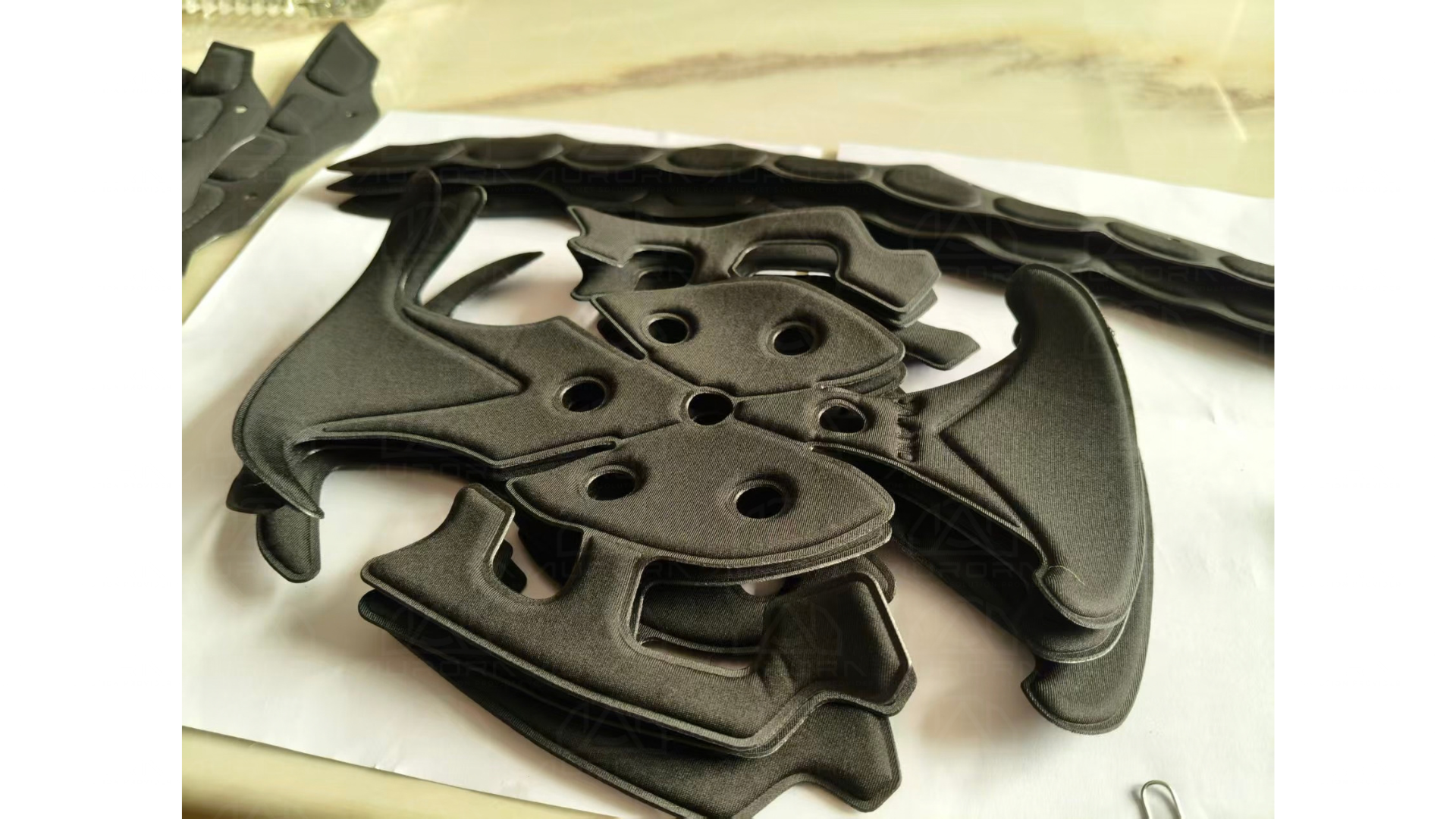
Because our padding development is connected with helmet engineering, fit systems, sewing, prototyping, assembly, and manufacturing, we can evaluate the padding as part of the complete helmet system rather than as an isolated component.
If you are developing a new helmet or want to improve an existing liner, contact Aurora Sports to discuss your custom helmet padding design and manufacturing requirements.
Contact Us:
📱 +1 (657) 762-7550


