
Four Skateboard Helmet Sizes: Why Tooling & Headform Matter | Aurora Sports
When developing a skateboard helmet program, one of the first questions a buyer may face is:
How many actual helmet sizes should we invest in?
We understand why some brands and factories try to reduce tooling investment.
A separate shell and EPS mold for every size increases the upfront development cost. To save money, a common approach is to produce only one or two physical helmet sizes and then use different thicknesses of comfort padding to cover a much wider range of head circumferences.
On paper, this can look efficient.
In practice, padding can only adjust fit within a limited range.
Padding can make the inside tighter or softer, but it cannot change the fundamental size, depth, width, or shape of the molded shell and impact liner.
The same problem applies when a buyer selects an existing factory mold simply because the circumference range looks correct. If the underlying headform is wrong for the target customer, thicker padding may not solve that problem either.
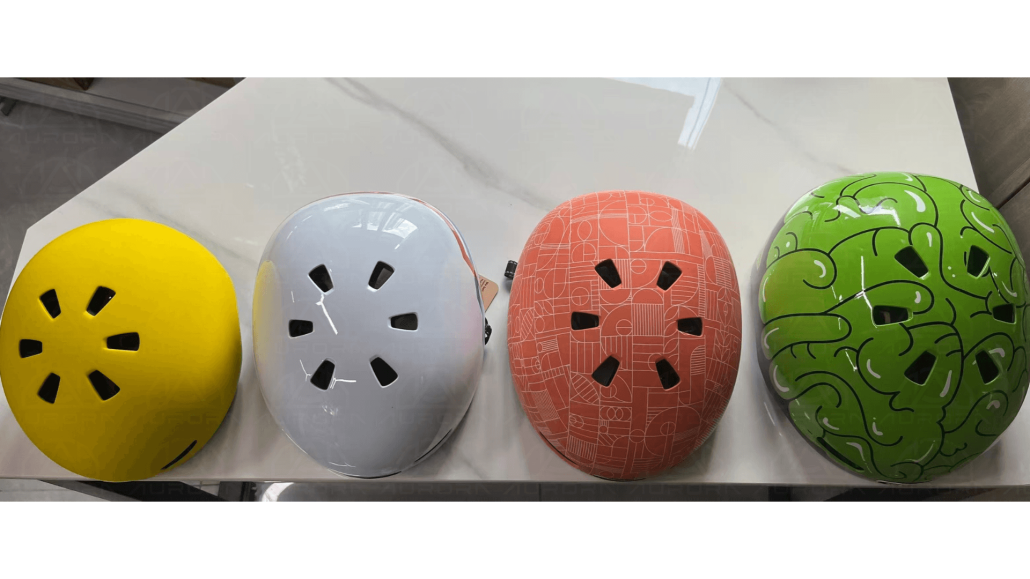
That is why Aurora Sports invested in four separate tooling sizes for its classic skateboard helmet platform.
The goal is simple:
Start with the right molded size and headform, then use padding to fine-tune the fit—not to compensate for the wrong helmet geometry.
 Four Actual Molded Sizes
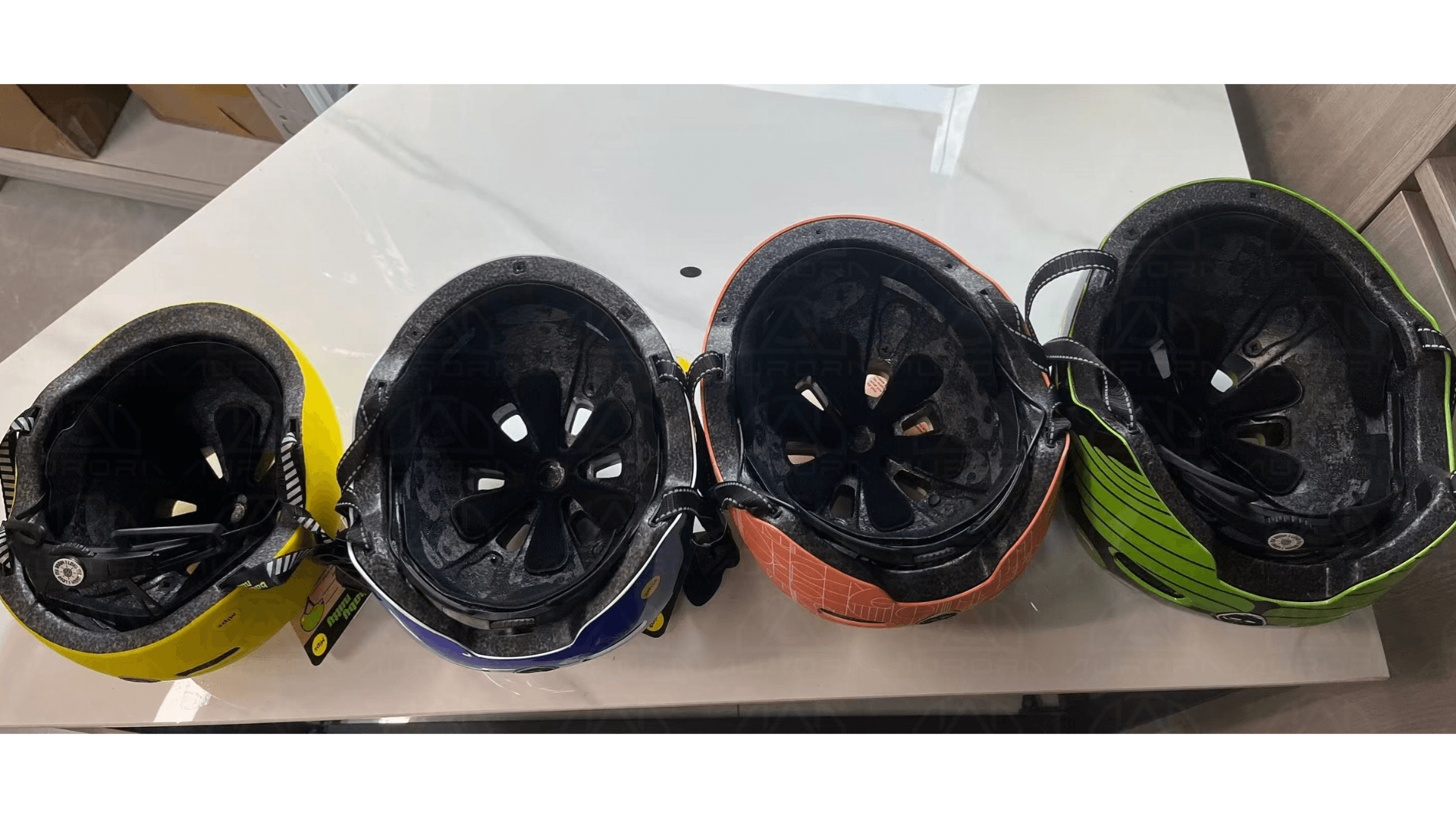
Aurora Sports’ skateboard helmet platform includes:
| Size | Head Circumference |
|---|---|
| XXS: | 48–52 cm |
| S: | 52–56 cm |
| M: | 56–60 cm |
| L: | 60–64 cm |
The ranges overlap intentionally because circumference is only one part of helmet fit.
Head shape, padding thickness, adjustment-system range, hair volume, and individual fit preference can all influence which size works best.
The platform uses a classic skate construction with an ABS outer shell, EPS impact liner, and comfort padding.
Final sizing, configuration, and certification requirements should always be confirmed for the specific OEM or private-label program.
Why Not Just Use Thicker Padding?
This is one of the most important questions for helmet buyers.
Imagine using a relatively large shell to cover several smaller head sizes.
For a smaller wearer, the factory may install much thicker padding to fill the extra internal space.
The helmet may feel tighter, but the shell and EPS liner are still physically larger.
That can create problems such as:
- An oversized appearance
- A helmet that sits too high
- Excessive padding bulk
- More heat around the head
- Uneven internal contact
- Helmet movement despite thicker pads
- Less natural proportions on smaller wearers
At the opposite end of the size range, a wearer may experience:
- Pressure around the forehead or temples
- Limited internal space
- Insufficient room for comfortable padding
- Difficulty achieving stable positioning
Padding is important, but it works best as a fine-adjustment tool.
It should not be expected to correct a shell or liner that is fundamentally the wrong size.
Headform Matters Too
Circumference alone does not determine whether a helmet will fit correctly.
Two helmets can both be labeled for the same head circumference and still feel completely different because their internal shapes are different.
Some helmet molds have a more elongated or oval internal profile, while others are considerably more round.
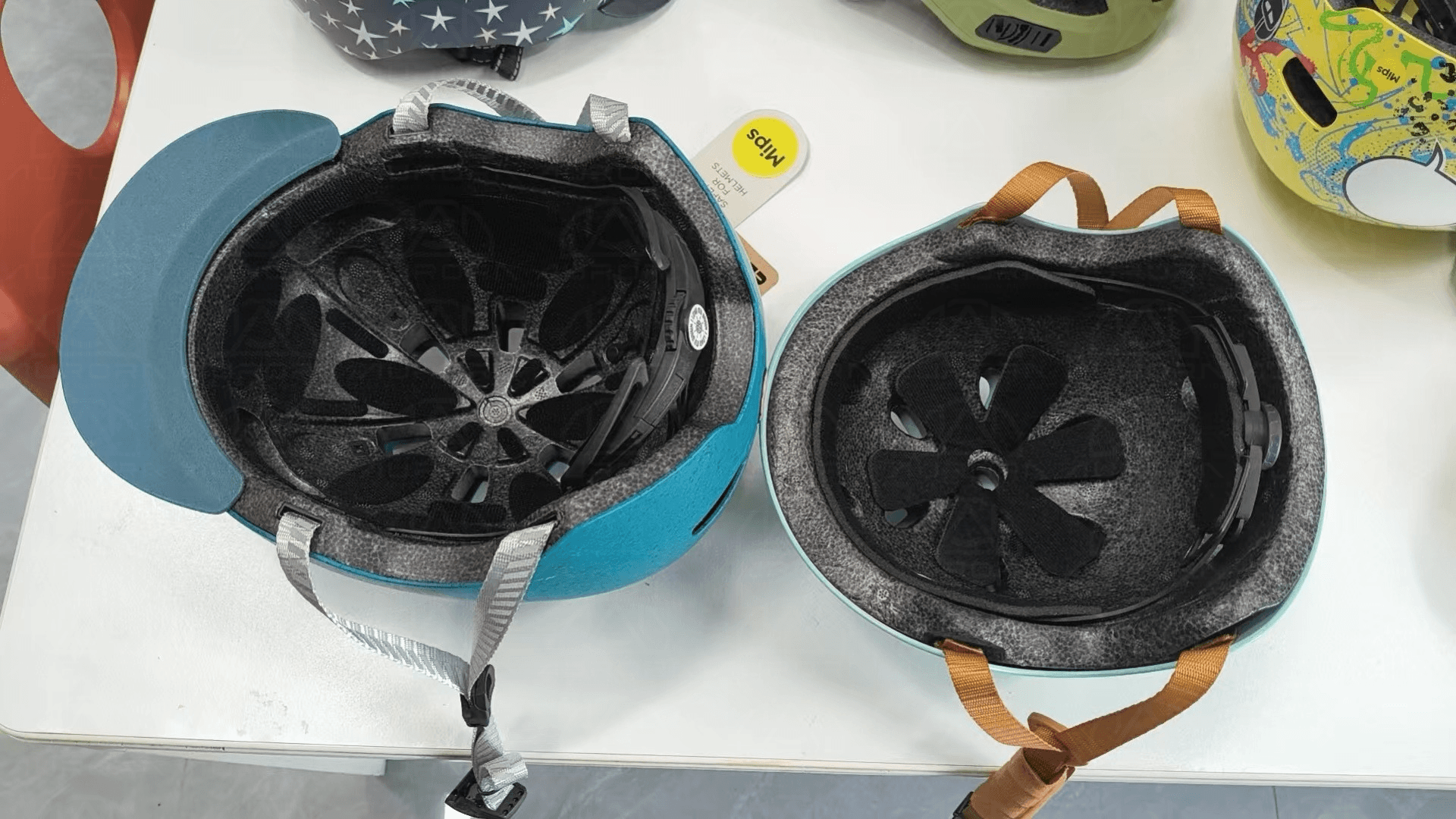
The difference can be obvious when looking inside the helmet.
One mold may provide more front-to-back length, while another may be wider and rounder.
For the wrong wearer, this can create:
- Forehead pressure
- Pressure at the sides of the head
- Gaps between the head and padding
- Excessive helmet movement
- Poor positioning
- Difficulty achieving a naturally secure fit
For an ODM buyer, this means selecting an existing factory mold based only on its stated circumference range can be misleading.
A mold may technically cover the required size but still have a headform that does not suit the intended market.
Before selecting a helmet platform, buyers should ask:
- What headform was the mold developed around?
- Is the interior relatively round or elongated?
- Which market was the helmet originally designed for?
- Has the fit been evaluated with the intended customer group?
- Are true physical sizes available, or is padding doing most of the adjustment?
Aurora Sports’ four-size classic skateboard helmet platform was developed around a European-style headform.
That does not mean every European wearer has the same head shape, or that the helmet is limited to Europe. Individual head shapes vary in every market.
The important point is:
Choose the mold for your target customer—not simply because the circumference number looks correct on a specification sheet.
The Buyer’s Trade-Off: Tooling Cost vs. Product Fit
For a brand launching a helmet program, fewer molds can reduce the initial investment.
That is understandable.
But the better question is:
What will that saving cost over the life of the product?
A lower tooling investment may later contribute to:
- More fit complaints
- Higher return and exchange rates
- Negative customer reviews
- Complicated padding combinations
- Retailer frustration
- Oversized-looking youth helmets
- Difficulty serving both smaller and larger users
- More limitations when expanding the product range
For a brand planning to sell the helmet for several years, tooling is typically a long-term investment supporting many future production runs.
Saving tooling cost can make sense. Saving money in the wrong place may not.
Four Molds Give Padding the Right Job
Using four molded sizes does not eliminate the importance of padding.
Good padding still contributes to:
- Comfort
- Fine fit adjustment
- Sweat management
- Pressure distribution
- Interior appearance
- Cleaning and replacement
- Brand differentiation
But with appropriately sized tooling, the padding can perform its intended role:
refining the fit instead of correcting the mold size.
That distinction is important.
Why Better Sizing Matters for Helmet Brands
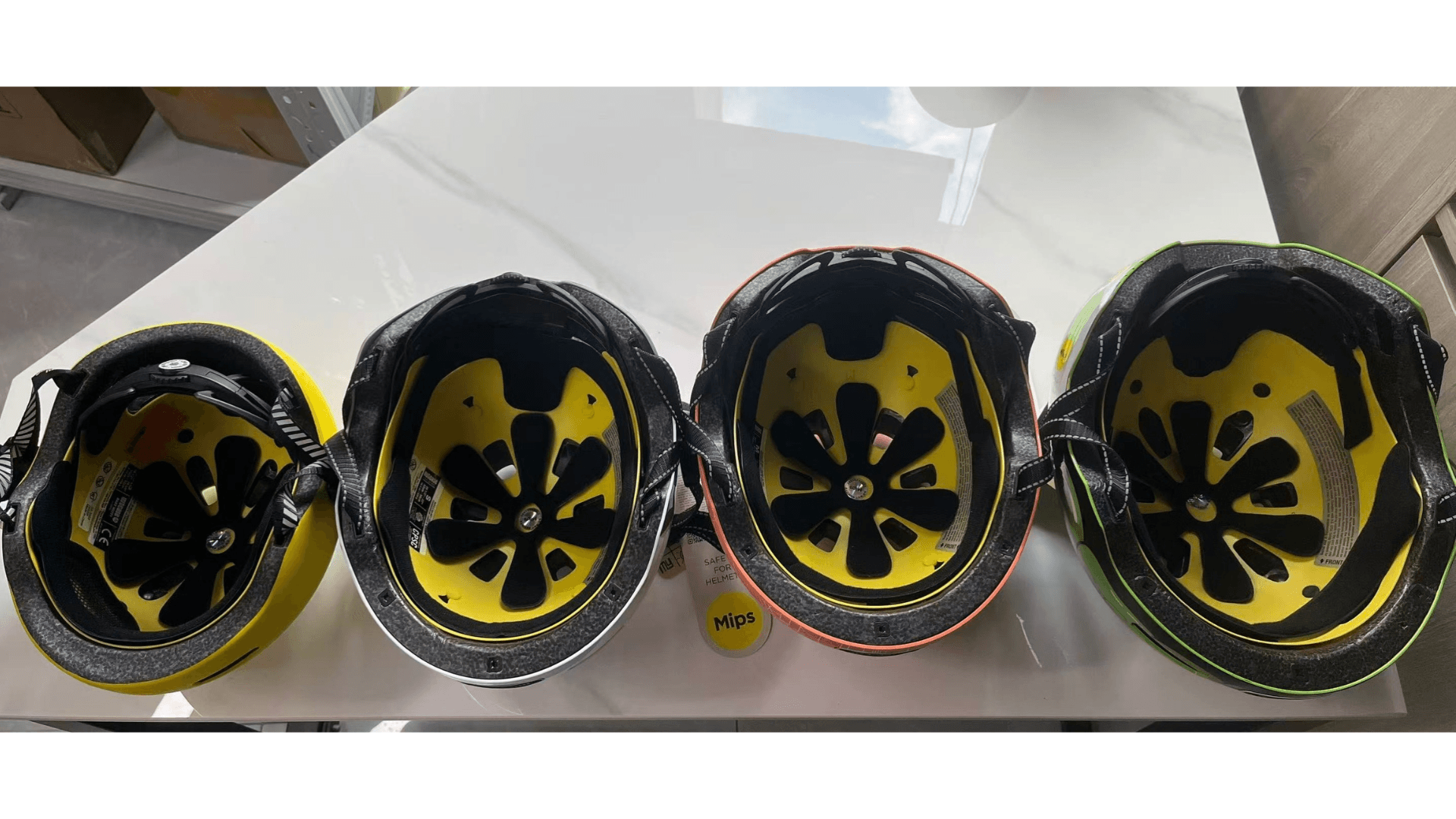
For an ODM, OEM, or private-label buyer, better molded sizing can support several commercial advantages.
Fewer Fit Complaints
Customers are less dependent on extremely thick or thin padding combinations.
Better Product Proportions
A smaller wearer can receive a physically smaller helmet instead of an oversized shell filled with extra padding.
This can be particularly valuable for youth and smaller adult sizes.
Better Retail and Online Sizing
Fit-related returns create cost for brands, distributors, retailers, and consumers.
A more complete physical size range gives customers a better starting point when using a size chart.
Stronger Product Positioning
Four actual molded sizes can help a brand present a more complete, professionally developed product range instead of stretching one or two molds across a very broad customer base.
How to Measure for a Skateboard Helmet
For the wearer, selecting a starting size begins with head circumference.
Use a flexible measuring tape and measure:
- Approximately 1–2 cm above the eyebrows
- Above the ears
- Around the widest part at the back of the head
Keep the tape level and comfortably snug.
Measure more than once and record the result in centimeters.
Then compare the measurement with the model-specific size chart.
If the measurement falls within two overlapping sizes, final selection may depend on:
- Head shape
- Padding configuration
- Adjustment range
- Preferred fit
- Hair volume
- Whether the wearer is still growing
The helmet should sit level and feel secure without creating painful pressure points.
If a dial-fit system is included, it should be adjusted until the helmet feels stable but comfortable.
A simple front-to-back and side-to-side movement check can also help confirm that the helmet is not sliding freely around the head.
Can Brands Customize the Four-Size Platform?
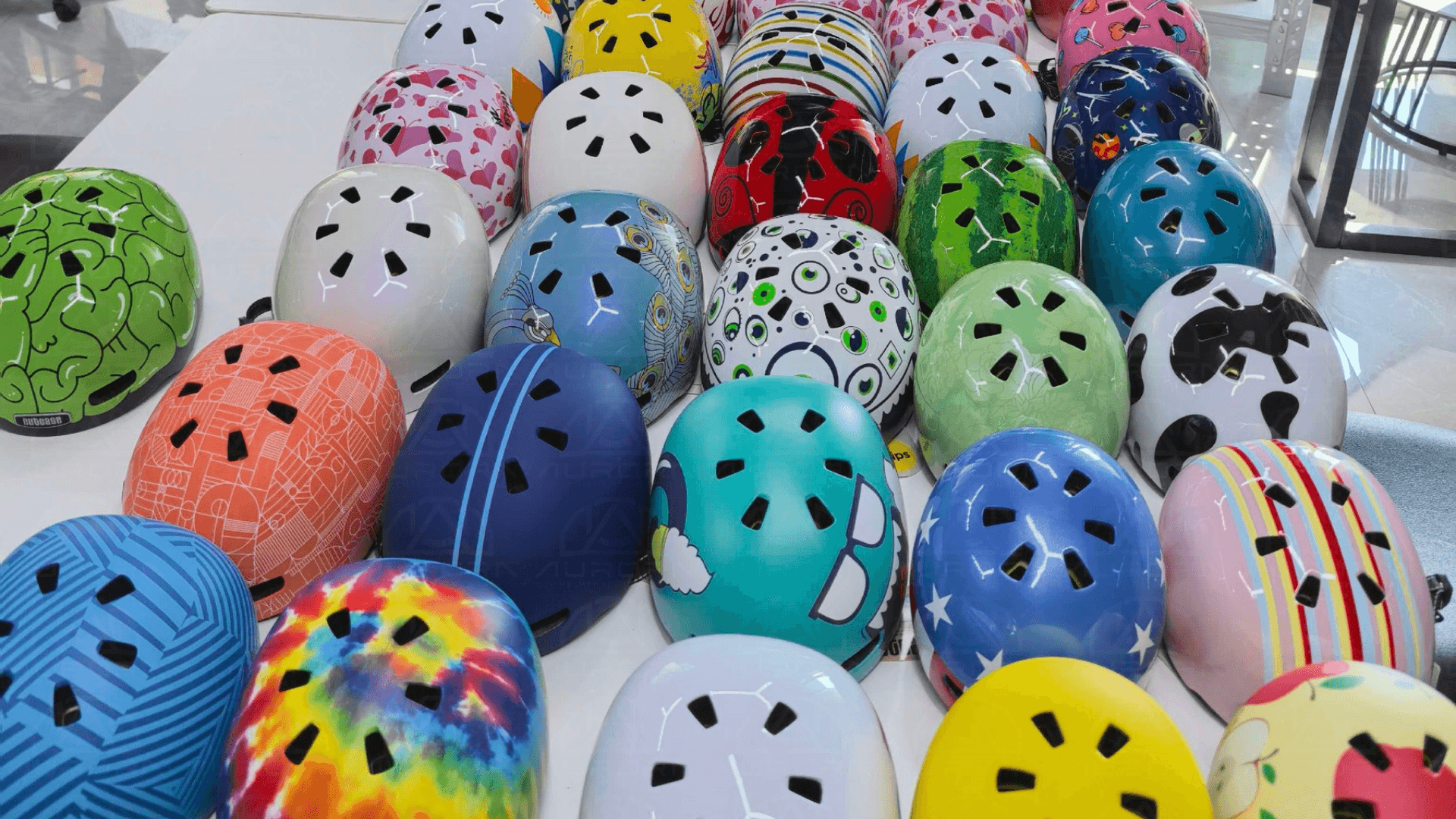
Depending on the project, customization may include:
- Pantone-matched colors
- Logos and graphics
- Surface finishes
- Padding
- Straps and buckles
- Adjustment systems
- Labels and instructions
- Custom packaging
Aurora Sports supports ODM, OEM, and private-label helmet programs, connecting product design, engineering, tooling, testing support, manufacturing, decoration, assembly, quality control, and packaging.
MOQ, testing requirements, and available customization should be confirmed for each individual project.
What About Testing and Certification?
Multiple molded sizes also require early certification planning.
Depending on the intended activity, market, and applicable standard, brands should determine:
- Which sizes require testing
- Which materials and components must be represented
- How samples should be prepared
- Whether different configurations need additional evaluation
- Which sizes and configurations are covered by the final reports
A passing result for one size should not automatically be assumed to cover every other molded size or configuration.
Testing strategy should therefore be considered alongside tooling development—not after mass production is ready to begin.
Better Fit Begins Before the Padding
For Aurora Sports, the principle is straightforward:
Do not ask padding to solve a tooling problem.
And do not expect padding to fully correct the wrong headform.
Padding and adjustable fit systems are valuable, but they work best when the shell and impact liner already provide the right foundation.
By investing in four dedicated skateboard helmet tooling sizes and considering the internal headform during development, Aurora Sports gives brands a stronger starting point for building a helmet range across children, teenagers, and adults.
For buyers, that can mean:
Better proportions. Better size coverage. Fewer fit compromises. A stronger product offering.
And for the wearer:
A helmet that feels like it was actually designed for their head—not simply adjusted with thicker padding.
Developing a skateboard helmet program? Contact Aurora Sports to discuss sizing strategy, available tooling, headform selection, customization, samples, testing support, and ODM/OEM manufacturing.
Contact Us:
📱: +1 (657) 762-7550


