
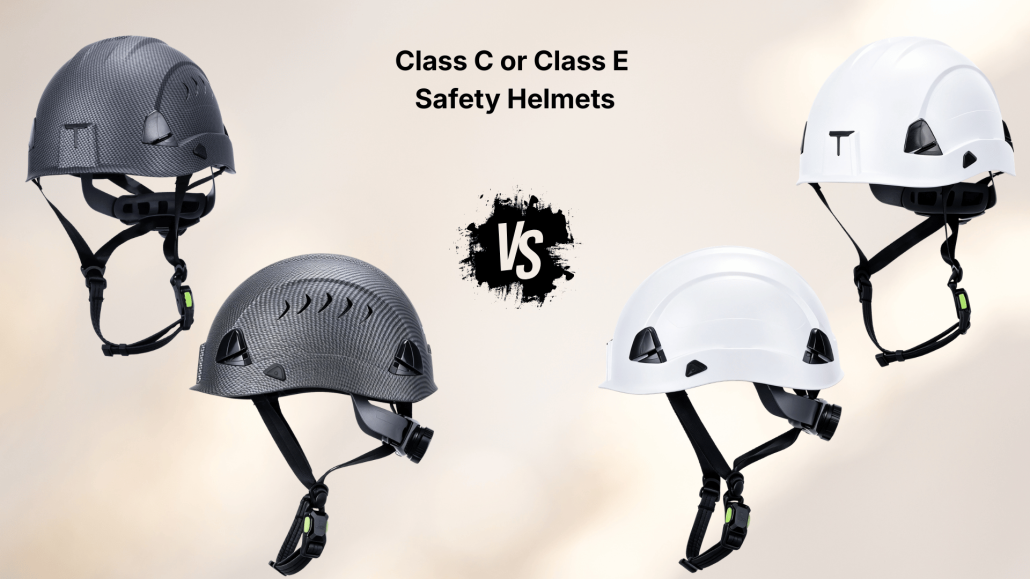
Class C vs. Class E Safety Helmets
What’s the Difference and Which One Do You Need?
Not all safety helmets are designed for the same hazards. And choosing the wrong electrical classification can be a serious mistake.
If you’re developing a safety helmet product line, sourcing hard hats for your customers, or building your own private-label PPE brand, you’ve probably come across two common classifications: Class C and Class E.
They may look similar, but there’s an important difference.
Class C helmets provide impact protection without electrical insulation. Class E helmets must meet additional electrical-protection requirements.
Understanding that difference helps you choose the right helmet for your customers—and avoid costly mistakes when developing or sourcing a product.
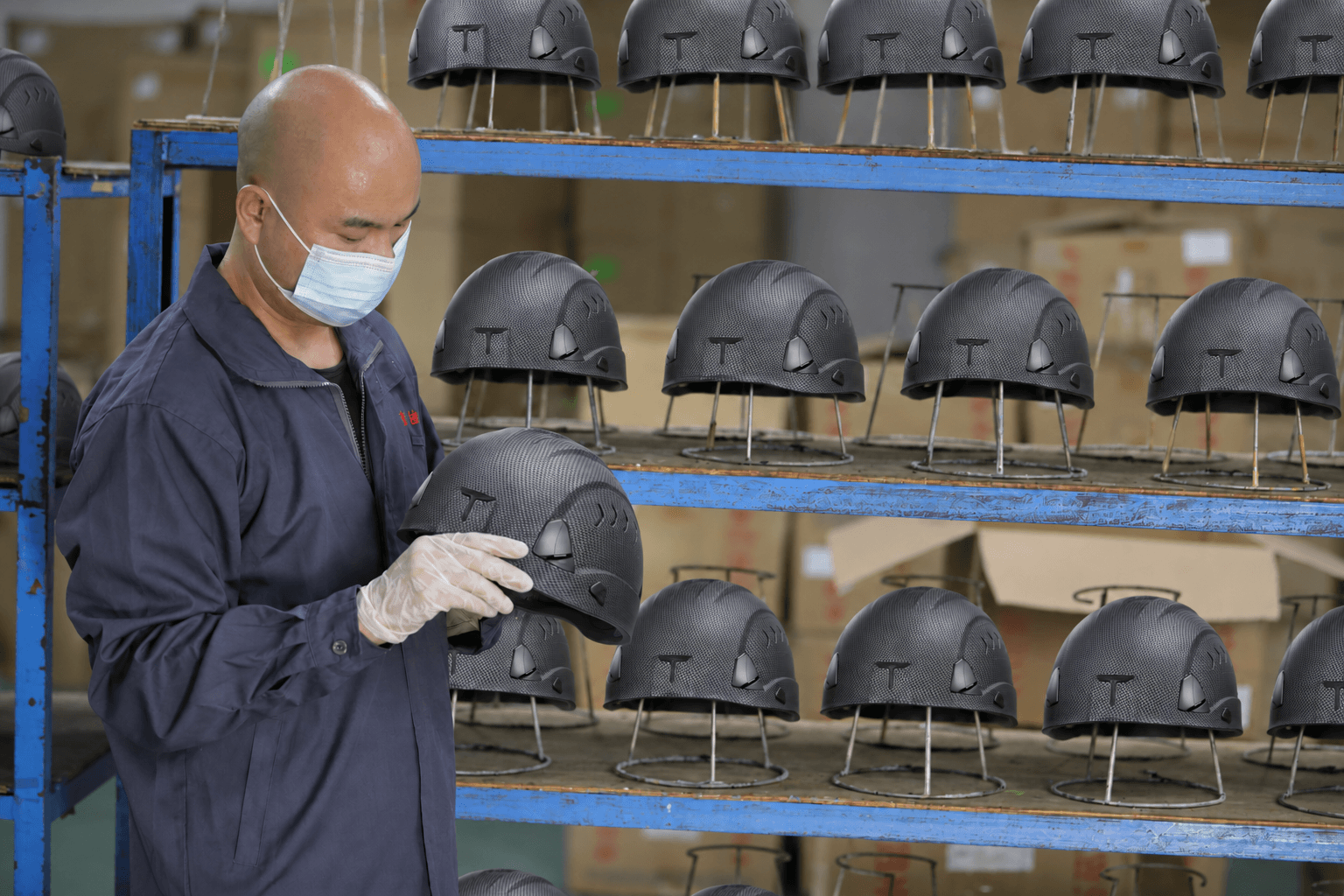
At Aurora Sports, we work with helmet brands, distributors, and PPE companies on private-label, OEM, and ODM safety helmet programs.
Let’s break down what these classifications mean, where they’re commonly used, and why they matter from a manufacturing perspective.
Class C vs. Class E Hard Hats: Quick Comparison
| Feature | Class C | Class E |
|---|---|---|
| Electrical protection | None | Designed and tested for electrical protection |
| Electrical proof test | Not required | 20,000 volts |
| Ventilation | Vented designs commonly available | Typically non-vented |
| Impact protection | Type I or Type II, depending on model | Type I or Type II, depending on model |
| Common applications | Construction, forestry, tree care, general industrial work without relevant electrical hazards | Electrical, utility, power distribution, and industrial work with electrical hazards |
| Main consideration | Comfort, airflow, and impact protection | Impact protection plus electrical-insulation requirements |
The key takeaway: Class E is not automatically better than Class C. The right classification depends on the hazards your customers face.
What Is a Class C Safety Helmet?
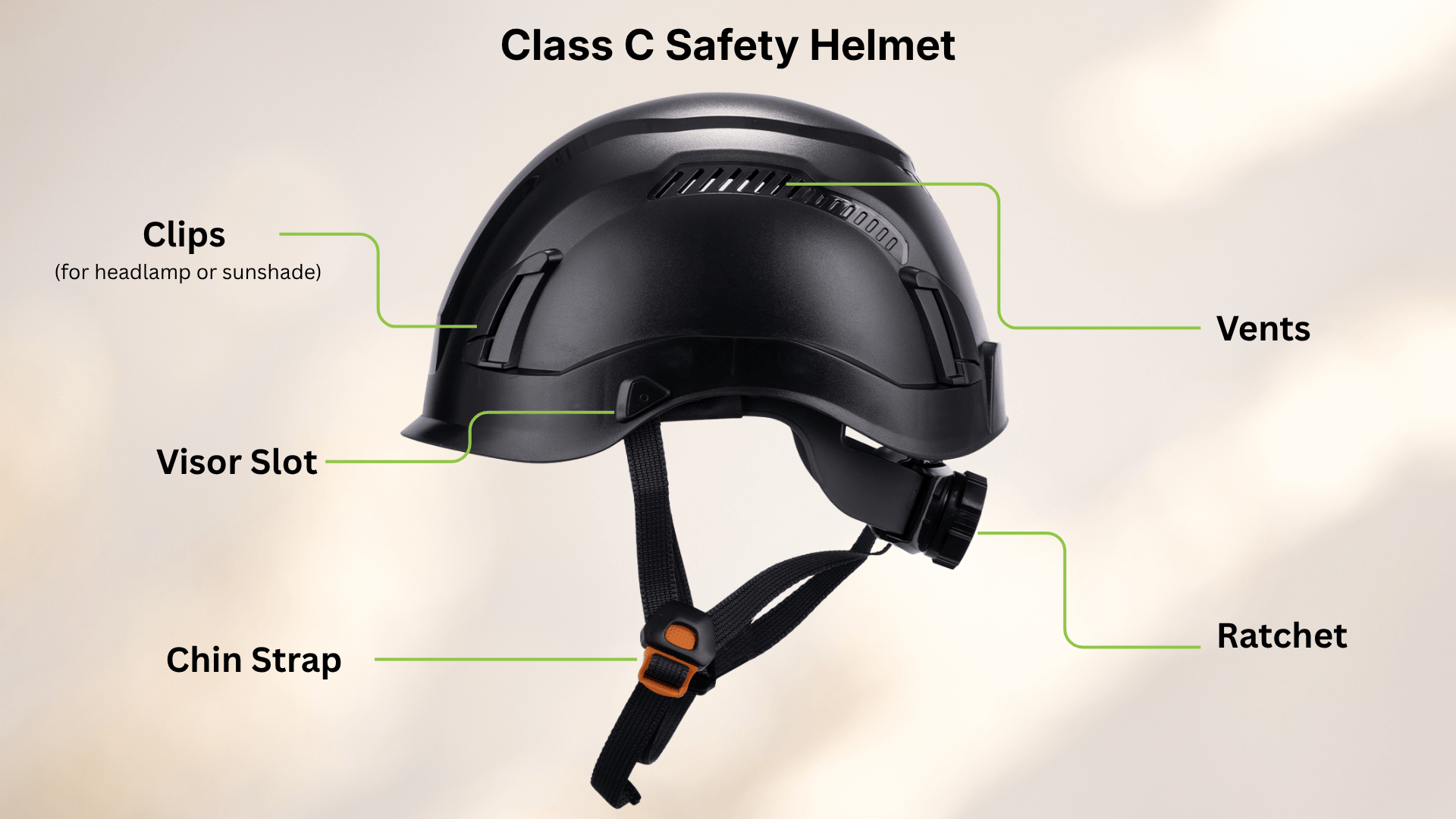
A Class C hard hat, also called a conductive-class safety helmet, provides impact protection but is not intended to protect against electrical hazards.
Because Class C helmets do not need to meet electrical-insulation requirements, manufacturers have more flexibility to develop ventilated designs.
For workers spending long hours outdoors or performing physically demanding tasks, ventilation can be an important comfort feature.
 Where Are Class C Helmets Commonly Used?
Depending on the jobsite hazard assessment, Class C helmets may be suitable for:
- General construction without electrical hazards requiring protective headwear
- Arborist and tree-care operations
- Forestry and outdoor maintenance
- Industrial environments without relevant electrical exposure
- Certain work-at-height and rescue applications
What Does This Mean for Helmet Brands?
If your customers prioritize ventilation, comfort, lightweight construction, and accessory compatibility, a Class C helmet platform may be worth considering.
Depending on the model, Aurora Sports can help brands explore options such as ventilation openings, ratchet adjustment systems, chin straps, padding, compatible visors, and hearing protection.
However, Class C helmets must not be used where electrically protective headwear is required.
What Is a Class E Safety Helmet?
A Class E safety helmet is designed to reduce the danger of exposure to higher-voltage electrical conductors.
Under ANSI/ISEA Z89.1, representative Class E helmet samples must withstand a 20,000-volt electrical proof test under controlled laboratory conditions.
This is an important distinction for helmet buyers, especially those supplying electrical contractors, utility companies, and industrial maintenance teams.
Important: The 20,000-volt test is not a safe working-voltage rating. A Class E helmet does not replace electrical isolation procedures, safe working distances, or other required electrical PPE.
Where Are Class E Helmets Commonly Used?
Class E helmets may be appropriate for:
- Electrical installation and maintenance
- Utility and power-distribution operations
- Industrial electrical facilities
- Construction sites with identified electrical hazards
- Maintenance work involving exposure to energized conductors
The employer’s hazard assessment and applicable safety requirements determine which head protection is needed.
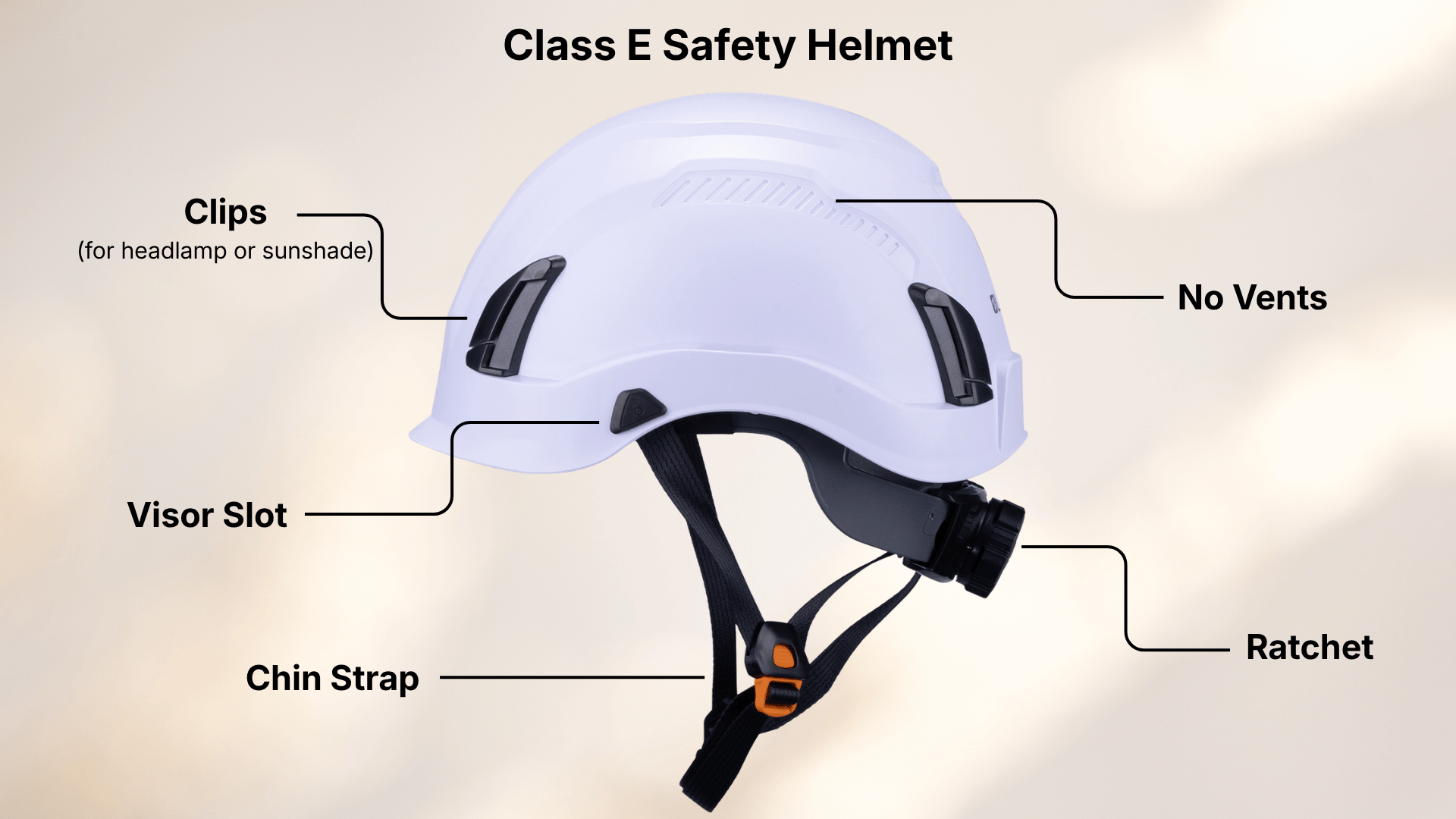
Why Are Class E Helmets Usually Non-Vented?
Electrical protection affects the helmet’s design.
Open ventilation holes can compromise the insulation performance required for Class E helmets. For this reason, Class E designs typically use non-vented shells.
But there’s more to it than simply removing the vents.
Shell materials, construction, components, and the complete helmet configuration must all be considered during development and testing.
A vented Class C helmet cannot automatically become Class E just by covering its ventilation openings or changing the label.
This is why electrical classification needs to be considered early in helmet development.
Type I vs. Type II: Don’t Confuse Helmet Type With Electrical Class
Another common question is whether Class C and Class E are the same as Type I and Type II.
They’re not.
These classifications describe different aspects of helmet protection.
Helmet Type = Impact Protection
- Type I: Designed to reduce impact forces primarily from blows to the top of the head.
- Type II: Includes additional impact-performance requirements for the front, back, and sides of the head.
Helmet Class = Electrical Protection
- Class C: No electrical protection.
- Class G: General electrical protection; representative samples are proof-tested at 2,200 volts.
- Class E: Electrical protection; representative samples are proof-tested at 20,000 volts.
A safety helmet may therefore be Type I Class C, Type I Class E, Type II Class C, or Type II Class E, depending on its tested design.
For brands developing a new product line, both the impact type and electrical class must be selected based on the intended market and application.
Why Class C vs. Class E Matters When Manufacturing Safety Helmets
From a factory’s perspective, electrical classification isn’t just another product specification.
It can influence the entire helmet design.
When developing an industrial safety helmet, manufacturers may need to evaluate:
- Shell materials and construction
- Ventilation design
- Impact-protection requirements
- Suspension and fit systems
- Chin straps and buckles
- Accessory mounting points
- Electrical testing requirements
- Production consistency and quality control
For example, a brand may want a lightweight, ventilated helmet with a visor and hearing protection for arborist customers.
Another brand may need a non-vented Class E helmet for electrical contractors.
Although both products are industrial safety helmets, their design priorities and testing requirements can be very different.
At Aurora Sports, our helmet injection molding and component development capabilities help us evaluate these requirements during product engineering.
Choosing the correct classification at the beginning can save time, avoid unnecessary redesigns, and make the development process more efficient.
Can Class C and Class E Helmets Use the Same Accessories?
This is an important question for brands selling complete helmet and accessory kits.
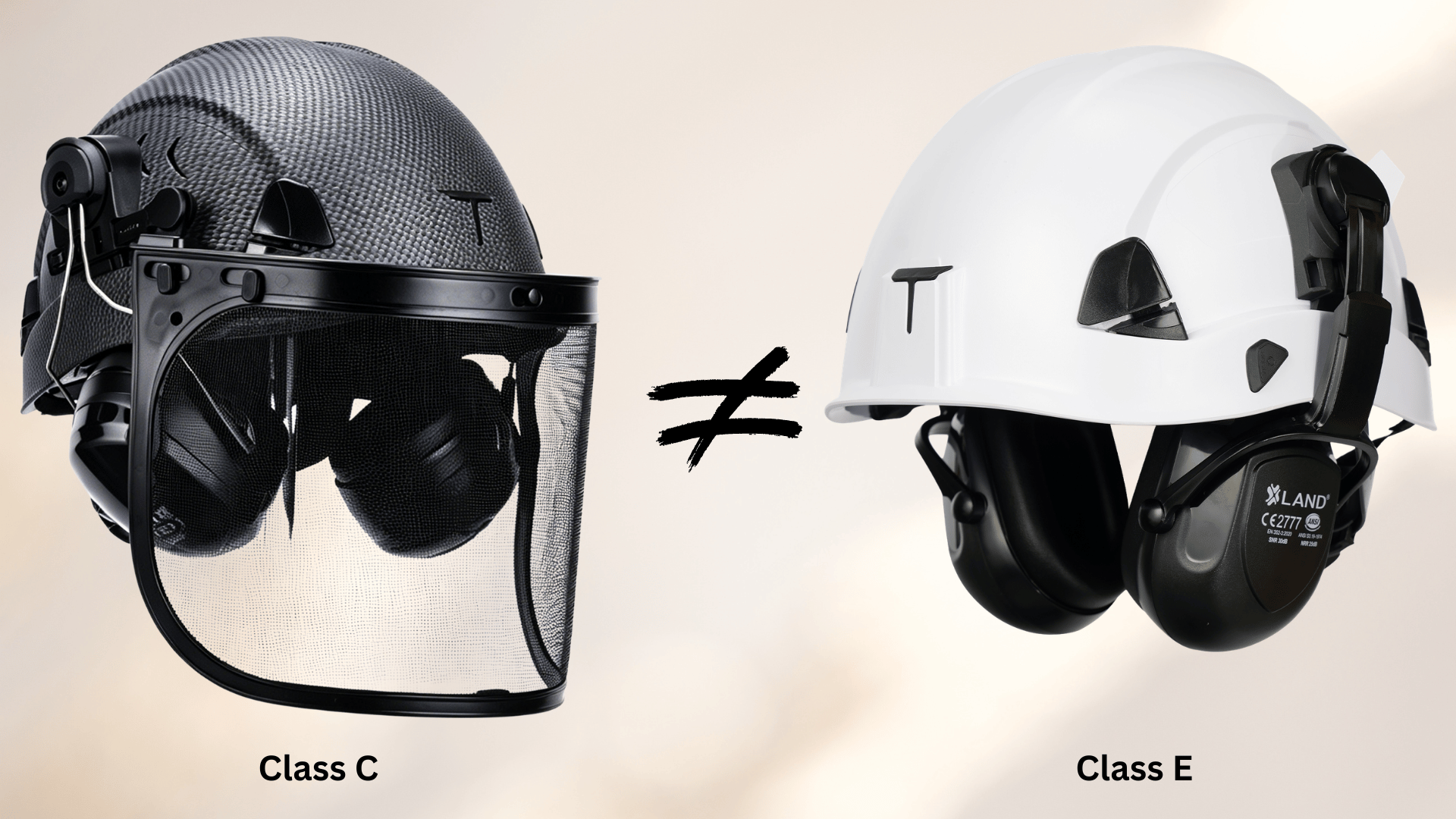
Both Class C and Class E helmets may support accessories such as visors, face shields, hearing protection, headlamp mounts, and replacement fit components.
However, an accessory that works with one helmet is not automatically suitable for another.
Accessories can affect the helmet’s fit, electrical performance, or other protective characteristics.
For Class E helmets especially, compatible components must be evaluated carefully to avoid compromising the required protection.
Aurora Sports can help coordinate helmet components and suitable accessories through our manufacturing and assembly services.
This gives private-label brands the opportunity to develop more complete product configurations while reducing the complexity of sourcing individual components from multiple suppliers.
All configurations remain subject to compatibility, testing, and applicable certification requirements.
Looking for a Class C or Class E Safety Helmet Manufacturer?
Knowing the difference between Class C and Class E is the first step.
The next question is: How do you bring the right helmet to market under your own brand?
At Aurora Sports, we support different manufacturing approaches depending on your project.
Private-Label Safety Helmets
Want to introduce safety helmets under your own brand without developing a completely new product?
Start with an existing Aurora Sports helmet platform and explore available logo, color, packaging, and approved accessory options.
This can be a practical approach for established distributors and brands expanding their PPE product lines.
OEM Safety Helmet Manufacturing
Already have your own helmet design or detailed specifications?
Our team can review your requirements and evaluate engineering, tooling, component manufacturing, assembly, and production needs.
ODM Safety Helmet Development
Looking to develop a customized helmet solution using an existing Aurora-developed platform or design resources?
We can help evaluate available product configurations, modifications, and development requirements.
For entirely new designs, additional engineering, tooling, testing, and development investment may be required.
One Manufacturing Partner, From Development to Production
Depending on the project, Aurora Sports can support:
Product Concept → Engineering Review → Prototyping → Tooling → Testing Support → Manufacturing → Assembly → Quality Control → Packaging
Instead of coordinating every stage with separate suppliers, your team can work with one manufacturing partner to manage the process.
Customizations, minimum order quantities, lead times, and certification requirements depend on the selected helmet platform and project specifications.
Frequently Asked Questions
- Is a Class E hard hat better than a Class C hard hat?
Not necessarily. Class E provides electrical protection that Class C does not. However, Class C may offer greater flexibility for ventilated designs. The correct choice depends on the workplace hazards and intended application. - Can a Class C safety helmet have ventilation holes?
Yes. Many Class C helmets feature ventilation openings to improve airflow. They are not suitable when electrical head protection is required. - Can electricians wear Class C hard hats?
Class C helmets should not be used where a hazard assessment requires electrically protective headwear. The employer must select appropriate protection for the identified electrical hazards. - Does a Class E helmet protect against arc flash?
A Class E electrical classification does not automatically mean the helmet has an arc-flash rating. Arc-flash protection requires a separate hazard assessment and appropriate protective equipment. - Can a Type II helmet also be Class E?
Yes. Type II describes impact performance, while Class E describes electrical performance. A helmet must meet the applicable requirements for both classifications. - Can Aurora Sports manufacture custom Class C or Class E helmets?
Aurora Sports can evaluate private-label, OEM, and ODM industrial safety helmet projects. Available Class C or Class E configurations depend on the selected platform, design feasibility, testing, and applicable certification requirements.
Which Safety Helmet Is Right for Your Brand?
If you’re developing a safety helmet line, start with the customers you’re trying to serve.
Are they arborists looking for ventilation and comfort? Construction workers requiring specific impact protection? Electrical contractors who need electrically protective headwear?
These answers will help determine the right helmet type, electrical class, features, and manufacturing approach.
At Aurora Sports, we don’t believe in choosing a helmet based on appearance alone. We believe in developing the right product for the market it’s intended to serve.
Whether you’re looking for an existing private-label helmet or exploring a new OEM/ODM safety helmet project, our team can help you review the available options.
Tell us your target market, required safety classification, estimated order quantity, and customization needs.
Let’s explore how Aurora Sports can help bring the right safety helmet to your customers.
Aurora Sports — Your Brand. Our Manufacturing Experience. Built Around Your Market.
Contact Us:
📱: +1 (657) 762-7550

