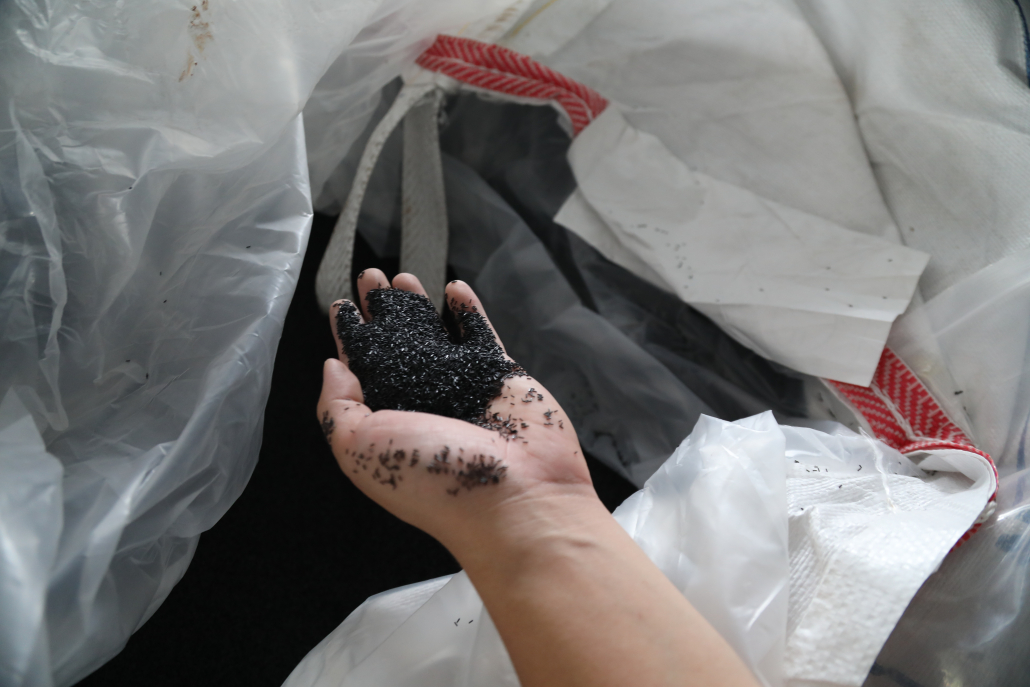
Beyond Helmets: Advanced EPS Molding for Lightweight Products & Seamless Component Integration
When most people think about EPS — Expanded Polystyrene, they may think of helmet liners or protective packaging.
But EPS molding technology can be used far beyond helmets.
Because EPS combines extremely low weight, energy absorption, thermal insulation, buoyancy and the ability to form complex three-dimensional shapes, it can be engineered for products across transportation, sports, electronics, aerospace-related equipment, marine applications and consumer products.
At Aurora Sports, decades of experience with helmet EPS molding, tooling and product engineering have given our team a strong foundation for developing more complex molded-EPS products.
And in many advanced EPS projects, the biggest engineering challenge is not simply molding the foam.
It is achieving a precise, clean and almost seamless integration between the EPS body and the plastic, metal or mechanical components embedded inside it.
Why EPS Is Used Across So Many Industries
EPS has an exceptionally high volume-to-weight ratio.
A relatively large three-dimensional structure can therefore remain extremely lightweight while still providing useful properties such as:
- Energy absorption
- Thermal insulation
- Buoyancy
- Product protection
- Shape stability
- Complex molded geometry
- Low material weight
- Efficient mass production
These characteristics make molded EPS useful for products where every gram matters.
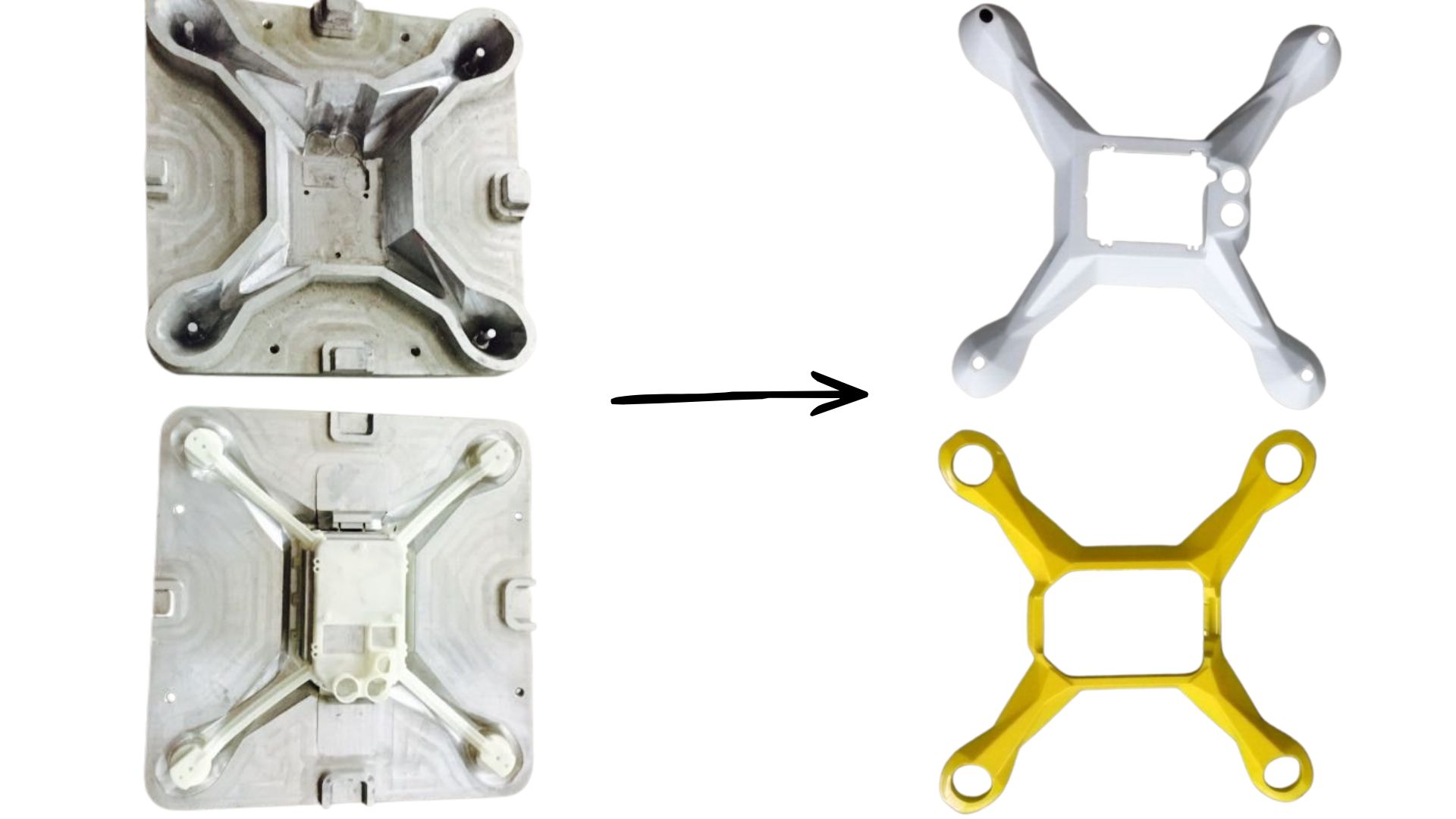
Lightweight EPS Drone & UAV Components
Weight is one of the most important considerations in drone and UAV development.
Reducing structural weight can contribute to:
- Increased flight time
- Improved payload capacity
- Lower energy consumption
- Easier handling
- Efficient aerodynamic structures
Molded EPS can be used to create lightweight:
- UAV airframes
- Wings
- Fuselage structures
- Internal structural cores
- Aerodynamic body components
Complex aerodynamic shapes can be molded directly into the EPS while internal areas can be engineered to accommodate electronics, wiring, batteries, structural inserts and other components.
For more demanding applications, EPS may also be combined with polycarbonate shells, composite reinforcements or other structural materials to create hybrid lightweight constructions.
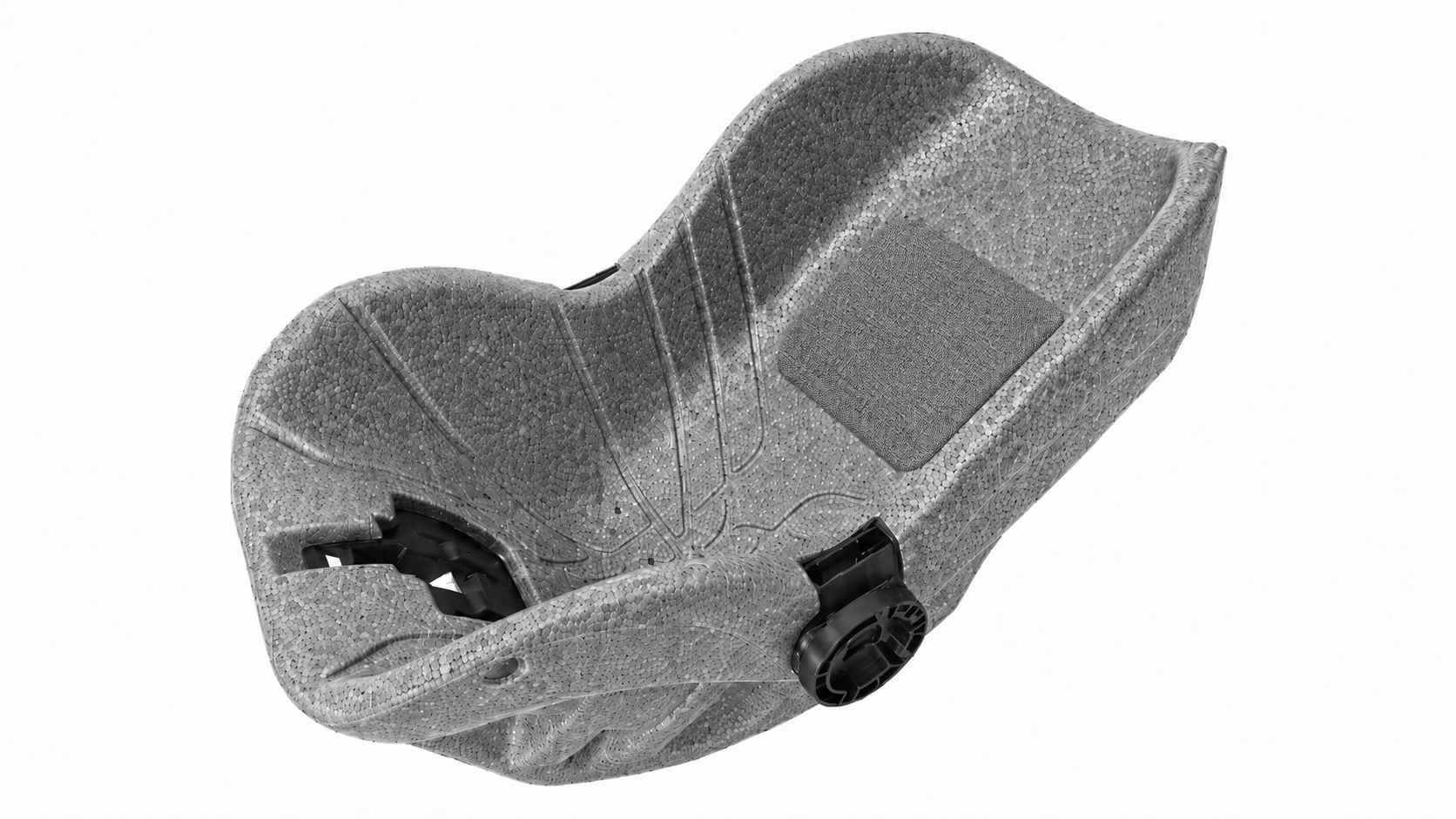
Lightweight EPS Child Car Seat Components
EPS is also widely used as an energy-management material in child restraint and car-seat systems.
Depending on the design, molded EPS components may be used around:
- Headrest areas
- Side-impact structures
- Seat backs
- Side wings
- Internal cushioning structures
- Energy-absorbing zones
For child car seats, low weight is important—but accurate geometry is equally critical.
The EPS structure often needs to interface precisely with:
Plastic Seat Structure + Adjustment Mechanisms + Textile Covers + Harness Components + Other Molded Parts
This makes tooling accuracy and component integration particularly important.
A complex child-seat EPS component may contain recessed areas, attachment points, mechanical interfaces and molded-in inserts that all need to align correctly with the final assembly.
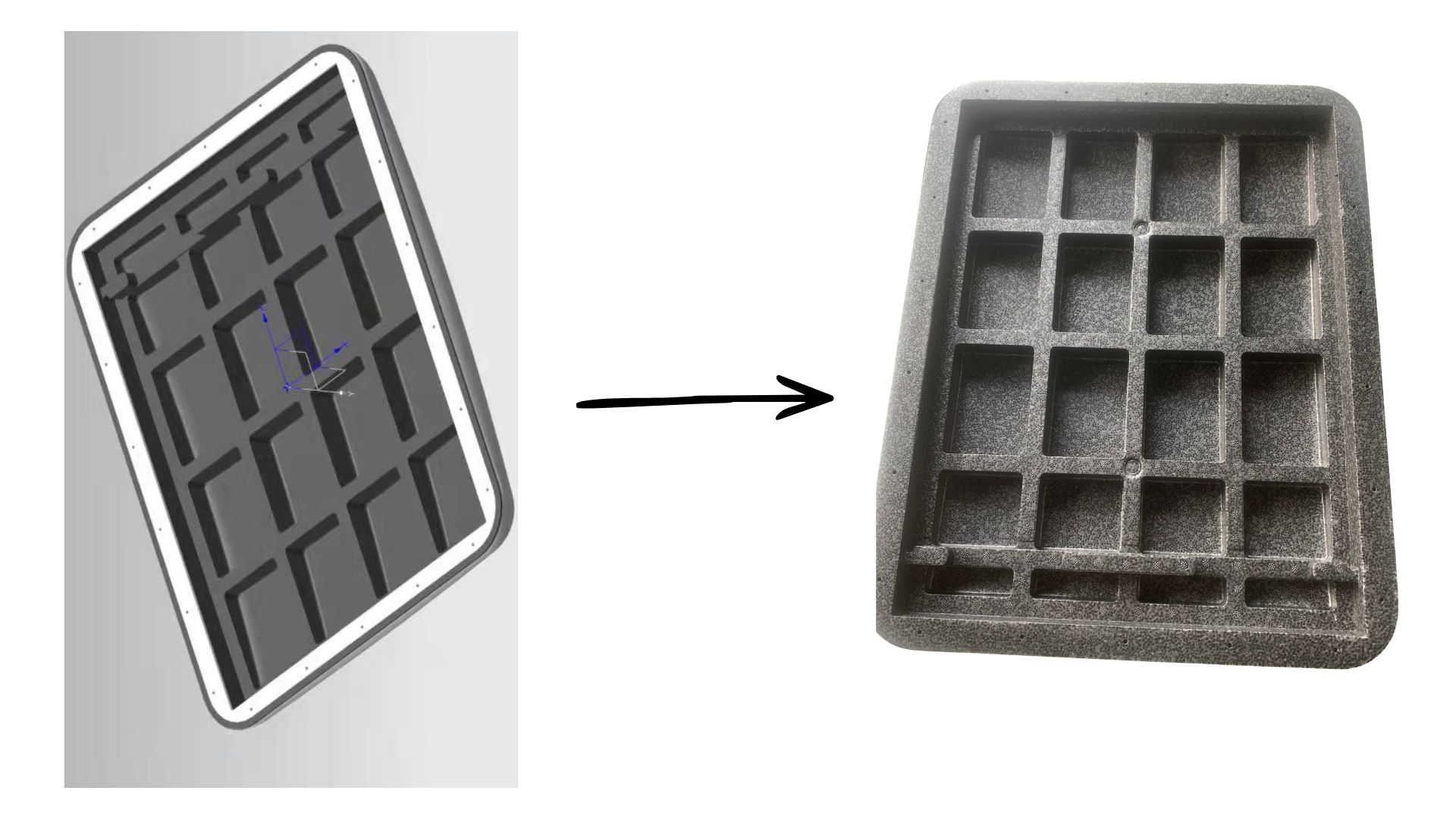
Lightweight EPS Protective Boxes & Equipment Packaging
EPS can also be engineered as more than simple disposable packaging.
Custom molded EPS can protect valuable or sensitive equipment during transportation while keeping overall shipping weight relatively low.
Potential applications include:
- Satellite and communication equipment packaging
- Electronics
- Optical equipment
- Instruments
- Aerospace-related components
- Technical equipment
- Medical equipment
- Industrial devices
- Custom transport cases
Unlike a basic rectangular foam box, engineered EPS packaging can incorporate:
- Precisely shaped cavities
- Equipment supports
- Cable channels
- Accessory compartments
- Impact-management zones
- Reinforced areas
- Embedded components
The internal geometry can be designed around the actual product being protected.
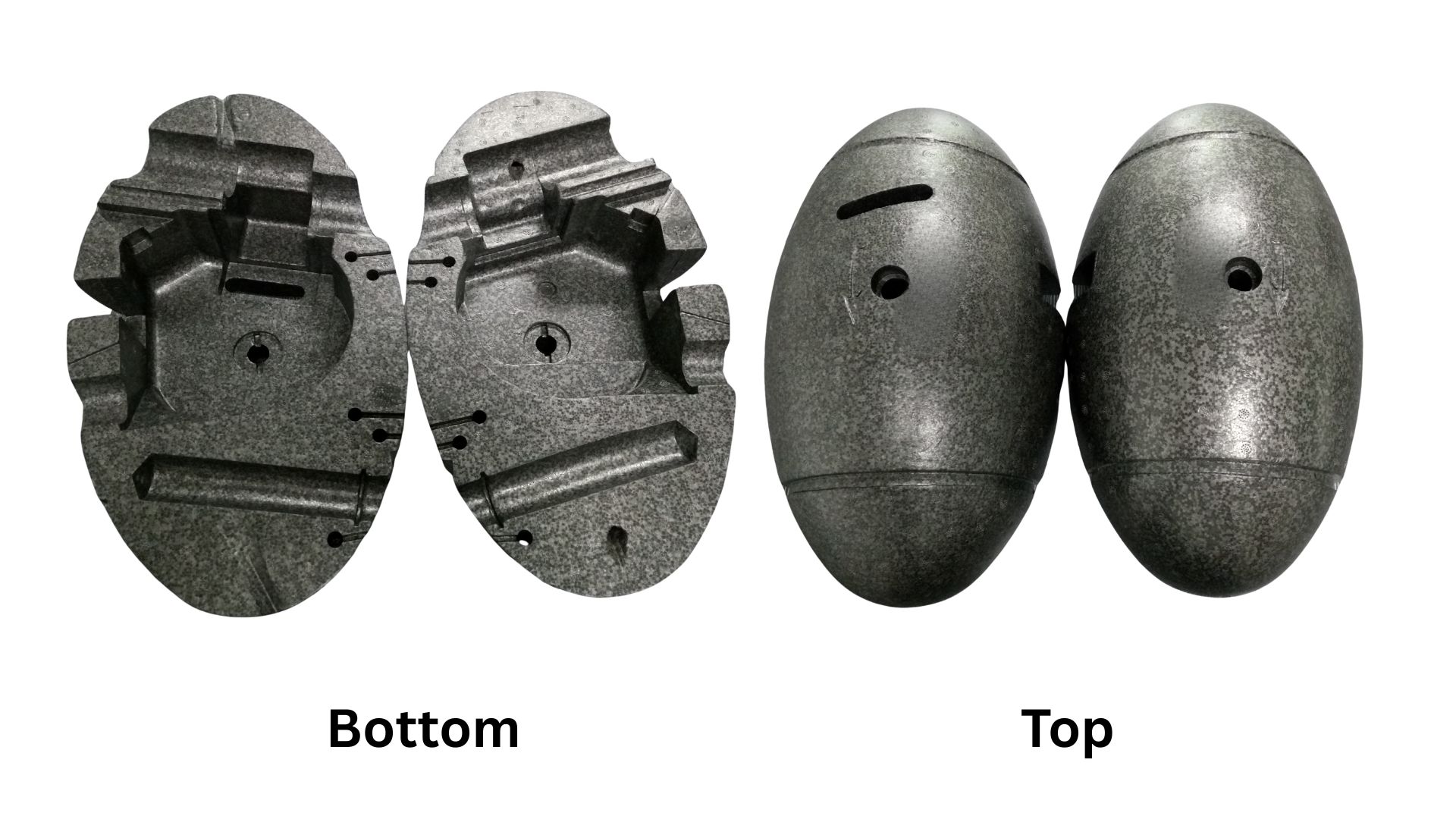
EPS Fishing Floats & Buoys
EPS is naturally well suited to applications requiring high buoyancy with very low weight.
Molded EPS can be used for:
- Fishing floats
- Marine buoys
- Flotation components
- Marker floats
- Aquaculture applications
- Other lightweight marine products
The shape, density and internal structure can be optimized according to the required buoyancy and mechanical design.
For more sophisticated products, the EPS body may also need to integrate:
- Plastic mounting points
- Ropes or attachment systems
- Internal tubes
- Metal inserts
- Identification components
- Protective outer shells
Again, the challenge becomes not simply molding EPS—but integrating these functional elements accurately into the foam structure.
The Real Challenge: Seamless Integration of EPS and Mechanical Components
This is where advanced EPS molding becomes much more interesting.
Many modern molded-EPS products are no longer made from foam alone.
They may combine:
EPS + Injection-Molded Plastic + Metal Inserts + Textile Components + Mechanical Systems + Electronics
Instead of manufacturing each part separately and attaching everything afterward, selected components can sometimes be positioned inside the EPS mold so the foam forms around them during molding.
These are often referred to as:
- Molded-in inserts
- Embedded components
- Insert-molded EPS components
- Integrated mechanisms
The objective is to create a more integrated finished structure.
Why Making the Interface “Seamless” Is Difficult
Creating a clean EPS-to-component interface requires much more precision than simply placing a plastic part inside a mold.
Engineers need to consider several factors simultaneously.
Precise Insert Positioning
The embedded component must remain in exactly the correct position during the EPS molding process.
Even a small movement can affect:
- Final dimensions
- Alignment
- Assembly
- Mechanical function
- Surface appearance
Custom locating features and mold fixtures may therefore be required to hold the component securely.
EPS Bead Flow Around the Component
Before steam fusion, expanded EPS beads need to fill the mold cavity around the insert.
A complex plastic mechanism can create areas where beads are difficult to distribute.
Poor filling can result in:
- Voids
- Low-density areas
- Incomplete surfaces
- Weak sections
- Visible gaps around the insert
The shape of both the insert and the EPS mold therefore needs to be designed with material filling in mind.
Steam Distribution & Bead Fusion
EPS molding relies on controlled steam to fuse the expanded beads together.
When an embedded plastic or metal component occupies part of the mold cavity, it can change the way heat and steam move through the surrounding EPS.
Engineers must consider:
- Steam access
- Mold vent locations
- EPS thickness around the insert
- Heat transfer
- Cooling
- Material fusion
A good mold needs to create consistent EPS fusion even around complicated embedded components.
Controlling the EPS-to-Plastic Interface
One of the most visible challenges is the boundary between the EPS and the molded-in component.
Customers may expect the interface to appear:
Clean + Tight + Accurate + Nearly Seamless
Achieving this requires careful control of:
- Insert geometry
- Mold tolerances
- EPS shrinkage
- Material expansion
- Component positioning
- Parting surfaces
- Venting
- Steam parameters
- Cooling
If the tolerances are not properly engineered, the finished product may show:
- Uneven gaps
- Misalignment
- Foam flash
- Loose inserts
- Visible cavities
- Inconsistent edges
For premium molded-EPS products, these details can strongly influence both function and perceived product quality.
Designing Mechanical Locking Features Into the Insert
A molded-in component should not always depend only on surface adhesion to remain inside the EPS.
Plastic inserts can be designed with mechanical features that allow the expanded foam to form around or through the component.
Depending on the design, these may include:
- Openings
- Slots
- Ribs
- Undercut geometry
- Lattice structures
- Anchor points
- Perforated areas
During molding, the EPS can surround these features and create a stronger mechanical connection between the foam body and the embedded component.
This is particularly useful for components that will later experience pulling, adjustment or assembly forces.
Mold Precision Becomes Critical
The more components that are integrated into EPS, the more important precision tooling becomes.
The mold must control not only the external shape of the EPS but also the exact position of:
- Plastic inserts
- Mechanisms
- Mounting points
- Holes
- Channels
- Component interfaces
- Assembly surfaces
This is where Aurora’s experience in both EPS molding and precision tooling becomes valuable.
Our engineers can consider the EPS structure and the embedded component as one integrated product rather than treating them as two unrelated parts.
A Good Example: EPS + Adjustment Mechanism
Consider an EPS child car-seat component containing a plastic adjustment mechanism.
The EPS needs to form around the mechanism while maintaining:
- Correct component position
- Smooth adjustment movement
- Accurate assembly dimensions
- Clean foam edges
- Strong component retention
- Comfortable surrounding geometry
If the plastic mechanism moves during molding—or if EPS enters an area where the mechanism needs clearance—the final adjustment system may not operate correctly.
That means the design needs to consider:
Mechanism Geometry + Mold Fixture + EPS Filling + Steam + Cooling + Final Assembly
all at the same time.
This is the difference between simple foam molding and engineered EPS product development.
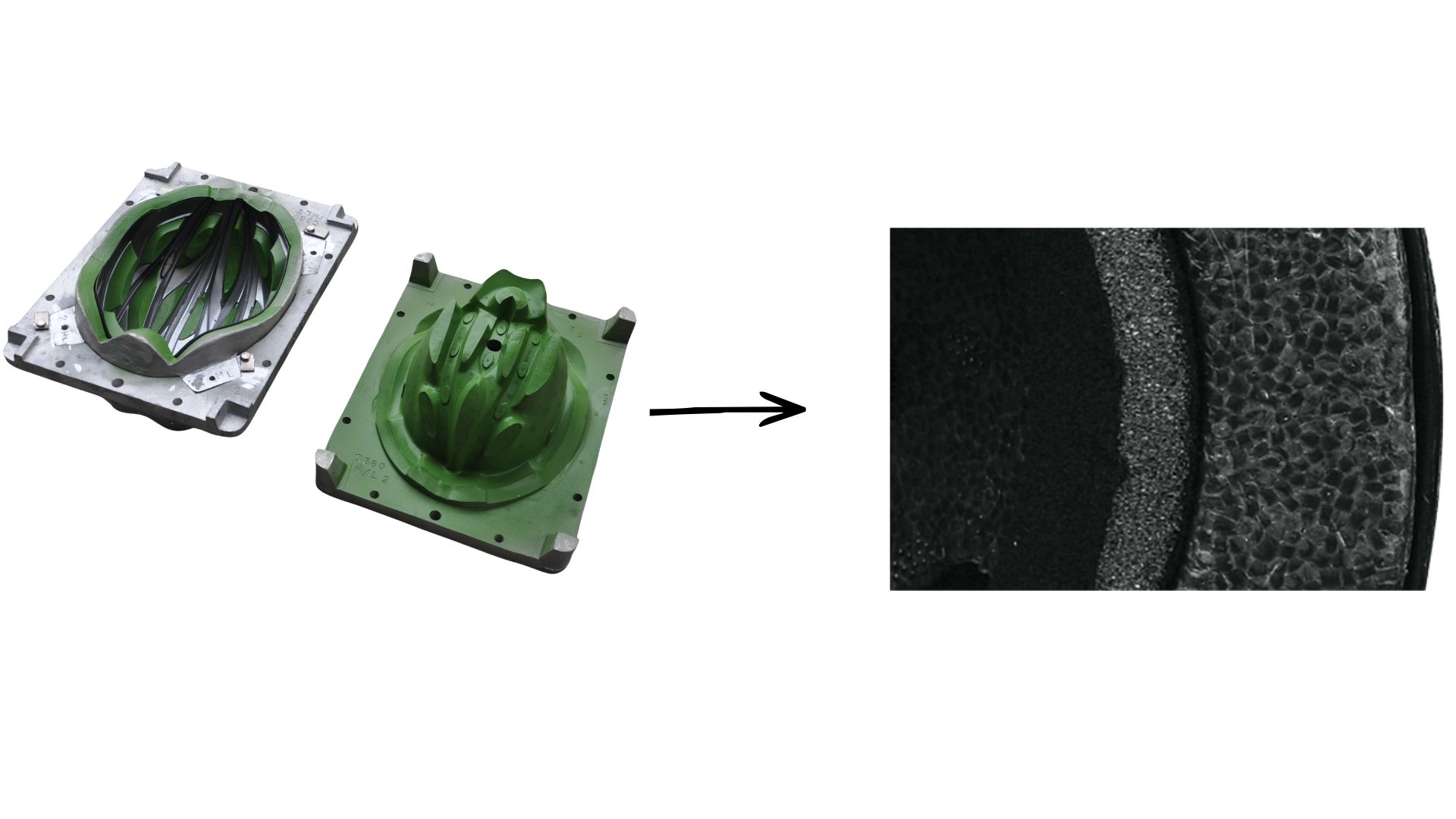
From Helmet EPS Expertise to Advanced Molded Products
Helmet manufacturing creates many of the same engineering challenges.
A modern helmet may integrate:
- EPS liners
- Vacuum-formed PC shells
- Internal reinforcement frames
- Fit-system interfaces
- Straps
- Plastic inserts
- Accessories
These components often need to align within relatively tight tolerances while keeping the complete structure lightweight.
Aurora’s experience solving these challenges in helmet production can also be applied to other custom EPS products.
Custom EPS Product Development
Aurora can support molded-EPS projects from early product development through production.
A typical project may involve:
Product Requirements
↓
Engineering
↓
Material & EPS Density Selection
↓
3D Design
↓
Insert / Mechanism Engineering
↓
Prototype
↓
Precision EPS Mold Development
↓
Molding Trials
↓
Interface & Assembly Evaluation
↓
Optimization
↓
Quality Control
↓
Mass Production
The exact process depends on the application and complexity of the product.
Applications We Can Evaluate
Aurora can evaluate customized EPS projects involving:
- EPS drones and UAV components
- EPS child car-seat components
- EPS protective equipment packaging
- Satellite and communication equipment boxes
- Electronic equipment packaging
- Fishing floats
- Marine buoys
- Sports products
- Lightweight structural components
- Custom impact-absorbing products
- EPS with embedded plastic components
- EPS with integrated mechanisms
- Custom molded EPS assemblies
Lightweight Is Easy to Say. Integration Is the Engineering Challenge.
The attraction of EPS is obvious.
It is lightweight, moldable, energy absorbing, insulating and buoyant.
But creating a sophisticated EPS product requires much more than choosing a foam density and building a mold.
The real engineering challenge often lies in making multiple materials and components function as one integrated structure.
At Aurora, we focus on details such as:
EPS Density + Product Geometry + Precision Tooling + Embedded Components + Mechanical Interfaces + Steam Distribution + Assembly + Production Consistency
because these are the details that determine whether a concept can become a reliable mass-produced product.
Have a Custom EPS Product Idea?
Whether you are developing a lightweight UAV component, child car-seat structure, protective equipment case, fishing buoy or another custom molded-EPS product, Aurora can help evaluate the engineering and manufacturing requirements.
You can begin by sharing a general overview of the product and intended application.
For projects involving proprietary mechanisms, unreleased products or confidential intellectual property, Aurora Team can propose an NDA before detailed CAD files, drawings, samples or technical information are shared.
Talk to Aurora Sports about your next custom EPS molding and integrated-component development project.
Contact Us:
📱: +1 (657) 762-7550


