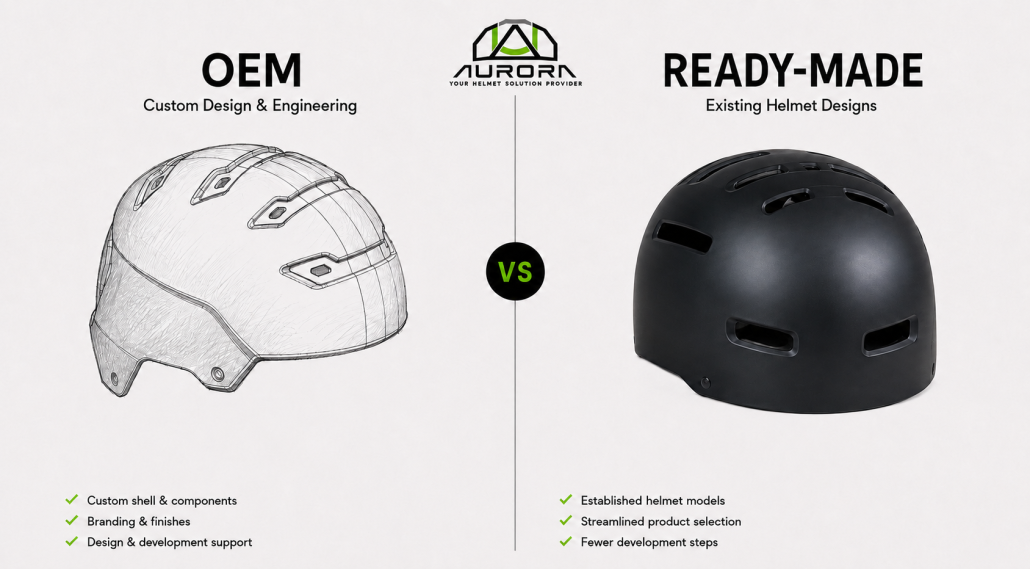
OEM vs. Ready-Made Helmets: Which Manufacturing Solution Is Right for Your Brand?
Launching a helmet brand involves more than choosing colors and adding a logo. One of the first decisions you need to make is whether to customize a ready-made helmet or develop an original product through OEM or ODM helmet manufacturing.
Both options can work well, but they serve different business goals. A ready-made helmet can help you enter the market faster and with a lower initial investment. OEM or ODM manufacturing gives you greater control over the helmet’s design, features, fit and brand identity.
Understanding the difference can help you choose the right helmet manufacturing solution for your budget, timeline and target market.
 What Is a Ready-Made Helmet?
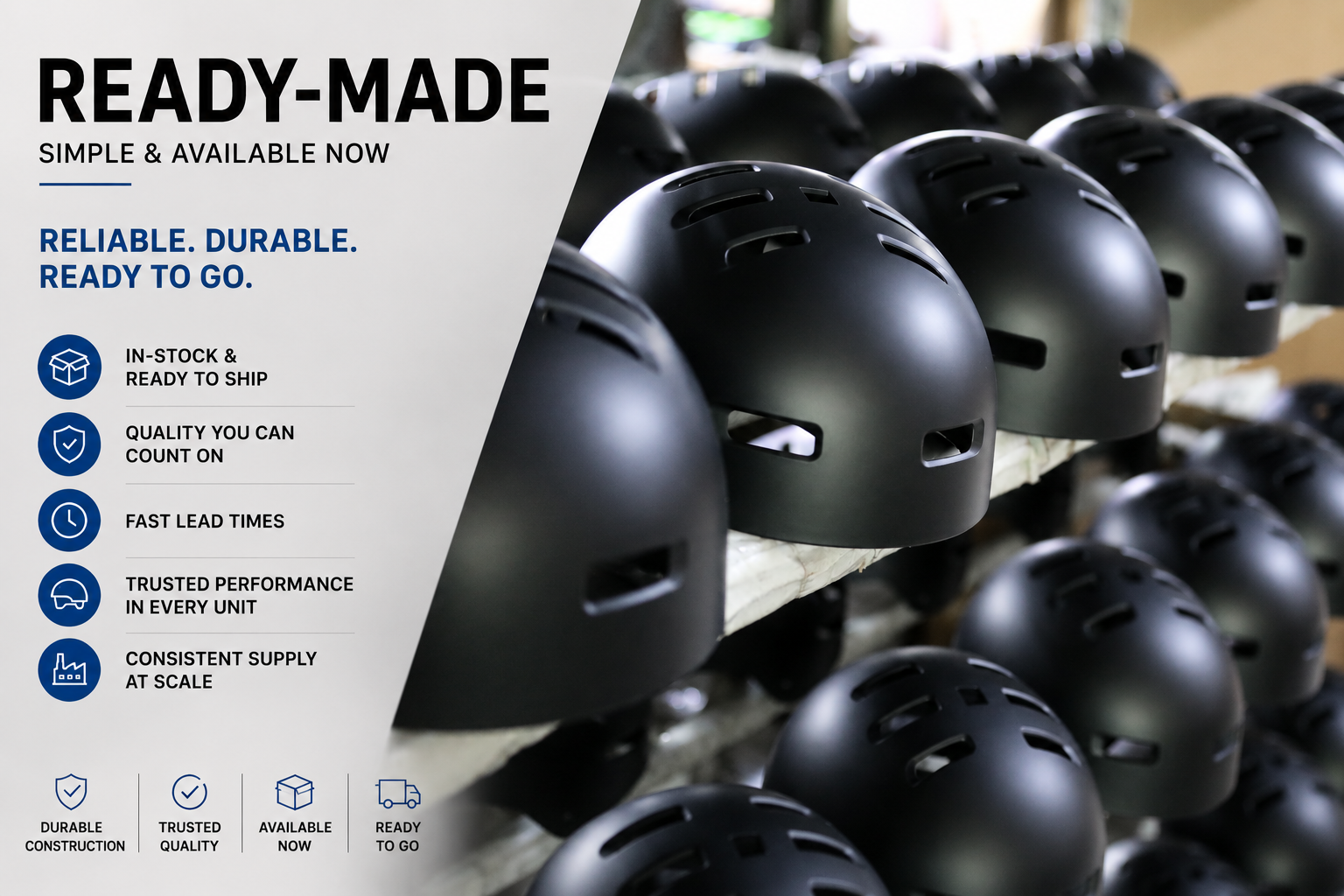
A ready-made helmet is an existing helmet model that has already been designed, tooled and prepared for production. The manufacturer may already have the molds, materials and production process in place.
Brands can often customize an existing helmet with options such as:
- Logo printing
- Custom colors
- Packaging
- Labels and instruction manuals
- Interior padding
- Straps, buckles and adjusters
- Selected accessories
This approach is sometimes called private-label helmet manufacturing, white-label helmet manufacturing or open-mold helmet manufacturing.
Because the main helmet structure already exists, brands can avoid much of the time and expense involved in creating new tooling.
Advantages of Ready-Made Helmets
Faster Product Launch
Ready-made helmets generally require less development time because the shell, liner and basic construction have already been created. Once colors, branding and packaging are approved, production can move forward more quickly.
This makes ready-made helmet manufacturing a practical option for brands that want to test a new market, expand an existing product line or launch with a shorter timeline.
Lower Initial Investment
Developing a completely new helmet can involve engineering, prototypes, tooling and testing. Choosing an existing helmet design reduces many of these upfront expenses.
For startups and growing brands, this can provide a more manageable path into the helmet industry.
Reduced Development Risk
An existing model may already have an established production process and defined material specifications. Depending on the model and intended market, certification reports or testing information may also be available for review.
However, brands should always confirm whether existing certifications apply to the exact materials, components, branding and configuration they intend to sell.
More Customization Than You May Expect
Ready-made does not necessarily mean generic. Depending on the helmet and order quantity, brands may be able to customize its appearance, padding, adjustment system, chin strap, accessories and packaging.
The result can still feel consistent with your brand without requiring an entirely new helmet mold.
When Should You Choose a Ready-Made Helmet?
A ready-made or open-mold helmet may be the better choice if:
- You want to launch quickly
- You have a limited initial development budget
- You want to test market demand before investing in new tooling
- An existing helmet already meets most of your requirements
- Your main customization needs involve colors, logos or packaging
- You want to add a new helmet category to your product line
For many new helmet brands, this is the most practical place to begin.
What Is OEM Helmet Manufacturing?
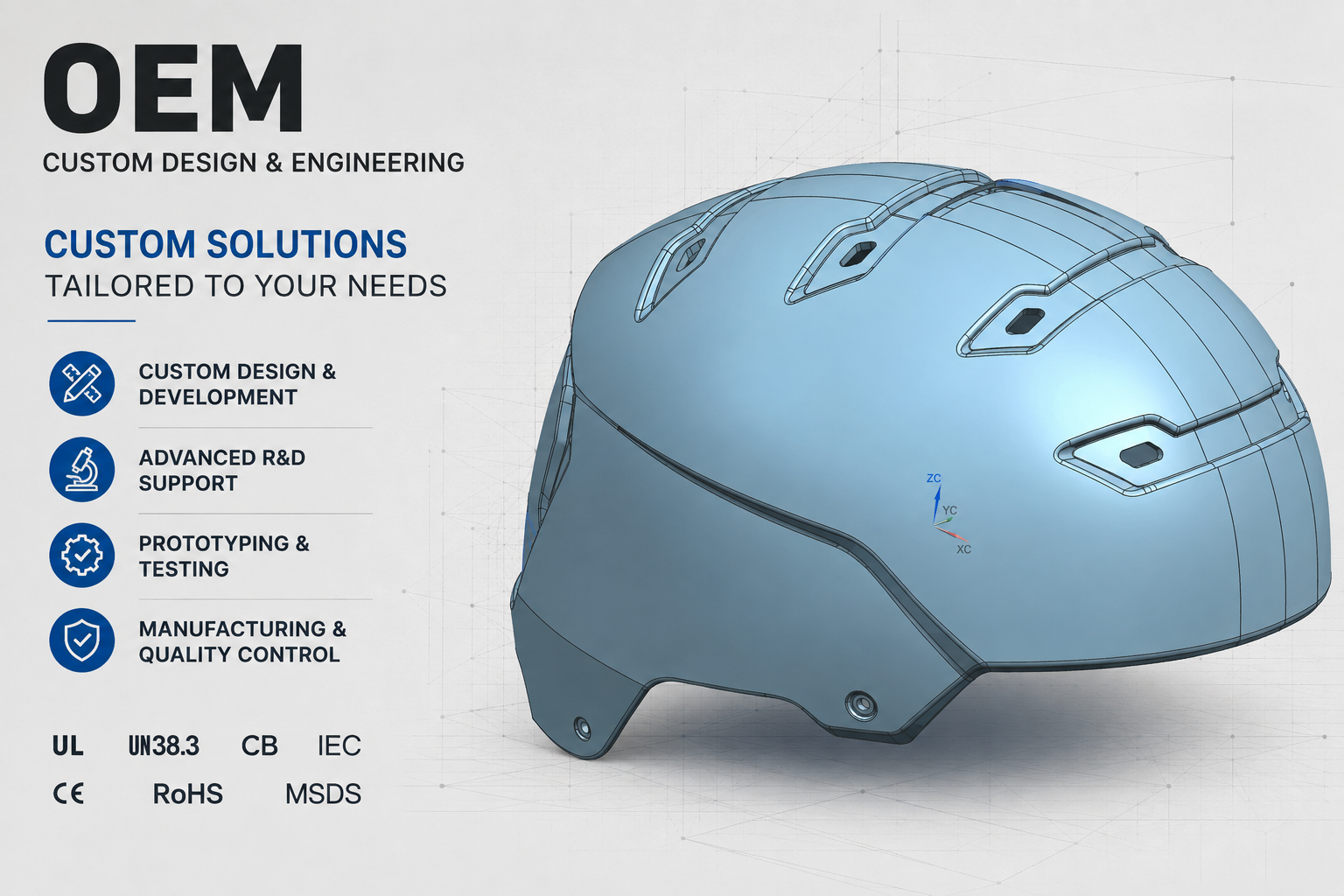
OEM stands for Original Equipment Manufacturer. In helmet manufacturing, OEM commonly refers to producing a helmet according to a brand’s requirements, specifications or existing design.
The brand may provide technical drawings, product requirements, reference samples or a detailed design concept. The helmet manufacturer then supports engineering, material selection, prototyping, tooling, testing and mass production.
OEM helmet manufacturing provides more control than private labeling, but it also requires a greater investment of time and resources.
What Is ODM Helmet Manufacturing?
ODM stands for Original Design Manufacturer. With ODM helmet development, the manufacturer contributes more directly to the product’s design and engineering.
A brand may begin with an idea, a target user or a list of required features rather than a production-ready design. The manufacturer’s research and development team helps turn that concept into a manufacturable helmet.
ODM development can include:
- Product design
- 2D sketches and 3D modeling
- Structural engineering
- Fit-system development
- Material recommendations
- Prototype production
- Mold and tooling development
- Product testing support
- Packaging development
- Mass production
This option is useful for brands that want a more distinctive helmet but do not have a complete in-house helmet engineering team.
Advantages of OEM and ODM Helmets
A More Distinctive Product
OEM and ODM manufacturing allow brands to create a helmet that is more difficult for competitors to duplicate. The shell shape, ventilation, fit system, padding, accessories and overall appearance can be developed around your market.
Greater Control Over Features
Instead of adapting your requirements to an existing model, you can develop features for a particular sport, activity or work environment.
Depending on the project, this could include:
- A unique shell profile
- Custom ventilation placement
- Specialized impact-liner construction
- A proprietary helmet adjuster
- Custom padding and fit
- Magnetic or traditional buckles
- Integrated visors or face protection
- Accessory attachment systems
- Headlamp compatibility
- Hearing-protection compatibility
- Brand-specific trim and finishes
Stronger Brand Identity
A custom helmet can carry your brand identity through its shape, color combinations, surface details and user experience—not only through a printed logo.
This can help a helmet stand out in a crowded market and support a stronger long-term product strategy.
Development for a Specific Market
Different helmet categories have different performance requirements and user expectations. OEM and ODM projects can be developed around the needs of cycling, climbing, equestrian sports, industrial safety, skate sports and other applications.
The required safety standards should be identified at the beginning of the project because they can influence the helmet’s structure, materials and testing plan.
Challenges of OEM and ODM Development
Higher Upfront Cost
Custom helmet development may require design work, prototypes, molds, tooling and laboratory testing. These expenses are generally higher than the cost of customizing a ready-made helmet.
Longer Development Timeline
Creating a new helmet involves several stages. Design revisions, prototype evaluations, tooling adjustments and testing can add time before mass production begins.
Larger Production Commitment
A fully customized helmet may require a higher minimum order quantity because the factory must prepare dedicated materials, tooling and production processes.
Brands should consider projected sales volume before committing to a completely original design.
OEM vs. Ready-Made Helmets: A Quick Comparison
| Factor | Ready-Made or Open-Mold Helmet | OEM/ODM Helmet |
|---|---|---|
| Initial investment | Lower | Higher |
| Development time | Shorter | Longer |
| Customization | Colors, logos, packaging and selected components | Shape, structure, fit, features, materials and accessories |
| Tooling | Existing molds | New or modified molds may be needed |
| Product uniqueness | Moderate | High |
| Development risk | Lower | Requires more planning and validation |
| Best suited for | Startups, market testing and fast product-line expansion | Established brands and differentiated long-term products |
How to Choose the Right Helmet Manufacturing Option
Before selecting a manufacturing approach, ask the following questions.
What Is Your Launch Timeline?
If you need inventory quickly, an existing helmet model may be the most realistic option. If your launch schedule allows time for product development, OEM or ODM manufacturing can provide greater design freedom.
What Is Your Development Budget?
Your budget should include more than the unit price. Consider design, prototypes, tooling, testing, packaging and production quantities.
A ready-made helmet can reduce initial development costs, while a custom helmet may offer greater long-term value through product differentiation.
How Much Customization Do You Actually Need?
If an existing helmet already has the shape, fit and features you need, custom colors and branding may be enough.
If your product requires a different structure, proprietary adjustment system or specialized accessory integration, OEM or ODM development is likely the better choice.
Which Safety Standards Apply?
The intended activity and sales market determine which helmet standards may apply. Requirements can vary between industrial safety helmets, climbing helmets, bicycle helmets, equestrian helmets and skate helmets.
A helmet manufacturer should understand the intended use and target market before development begins. Testing and certification requirements should never be treated as an afterthought.
What Quantity Do You Expect to Sell?
Ready-made helmets can be more appropriate for an initial market test. Custom tooling becomes easier to justify when expected sales volumes support the investment.
Can You Start With a Ready-Made Helmet and Develop a Custom Model Later?
Yes. This can be an effective growth strategy.
A brand can begin with an existing helmet to learn about customer preferences, sizing, colors, features and price expectations. Once demand has been established, that information can guide the development of a more customized OEM or ODM helmet.
This staged approach can reduce risk while giving the brand a path toward a more distinctive product line.
Why Work With Aurora Sports?
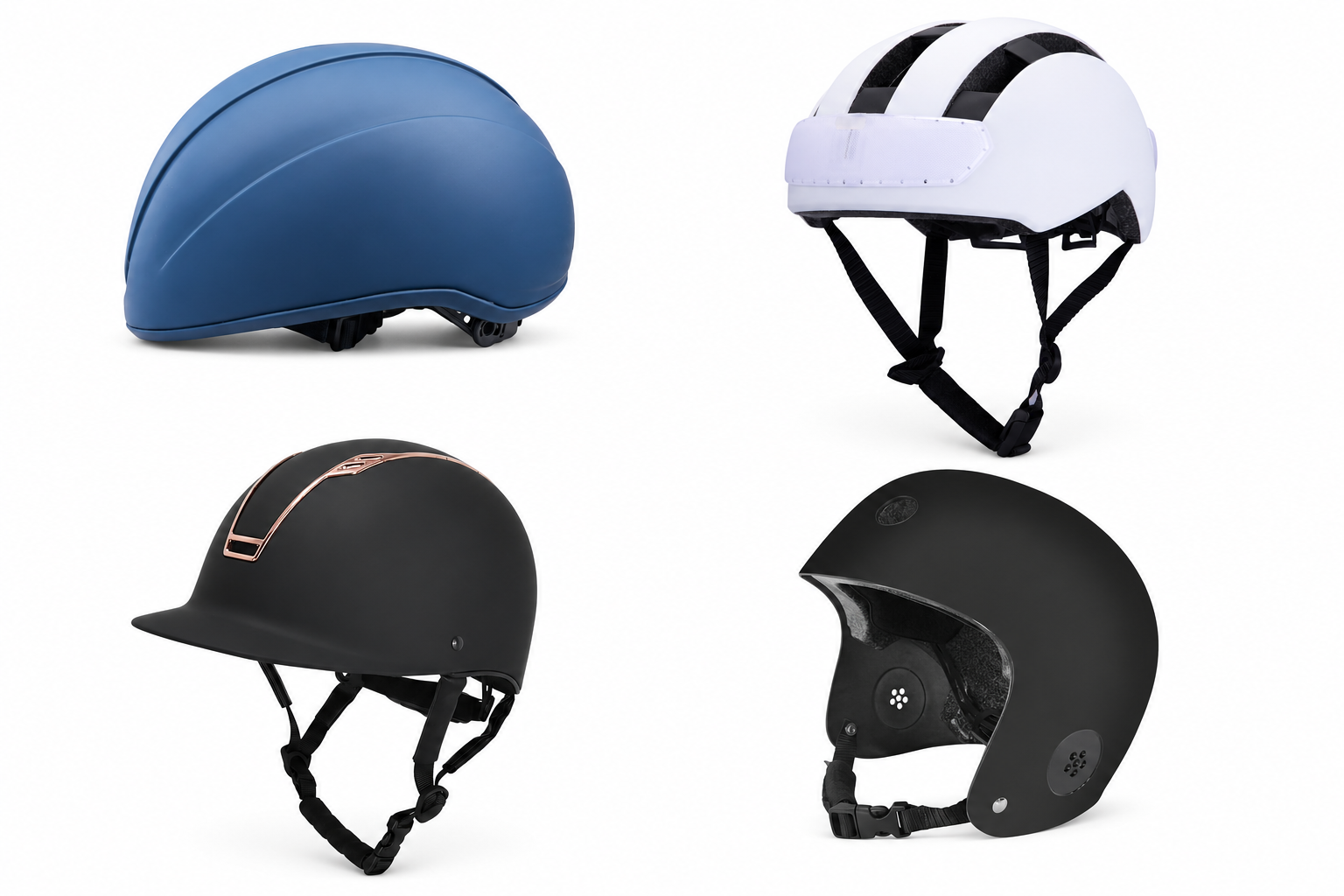
Aurora Sports is an experienced helmet manufacturer and OEM/ODM helmet supplier supporting brands through product selection, customization, development and production.
Our capabilities include:
- Existing helmet molds for faster private-label projects
- OEM and ODM helmet development
- In-house research and development support
- Helmet adjuster and fit-system options
- Custom colors, logos and packaging
- Prototype and sample development
- Mold and tooling development
- Material and component selection
- Testing and certification support
- Mass production and quality control
Aurora Sports manufactures helmets for multiple categories, including cycling helmets, climbing helmets, equestrian helmets, industrial safety helmets and skate helmets.
Whether you need to customize an existing helmet or create a new helmet from the ground up, our team can help identify a manufacturing route that fits your product goals, budget and launch schedule.
Ready-Made or OEM: Which One Is Better?
Neither solution is automatically better. The right choice depends on where your brand is today and where you want it to go.
Choose a ready-made or private-label helmet when speed, affordability and lower development risk are your priorities.
Choose OEM or ODM helmet manufacturing when you need a distinctive product, specialized features and greater control over the final design.
The most important step is finding a helmet manufacturer that can explain the tradeoffs clearly and help you plan for both your first production order and your long-term growth.
Start Your Helmet Manufacturing Project
Not sure whether an existing helmet or a custom-developed helmet is right for your brand?
Contact Aurora Sports to discuss your target market, helmet category, required features, estimated quantity and certification needs. Our team can help you compare available helmet models with OEM and ODM development options.
Your brand. Your market. The right helmet manufacturing solution.
Contact Us:
📱: +1 (657) 762-7550


