Developing a Helmet Comfort Liner? Start With the Right Forming Process — Not Just the Material
You are developing a new helmet—or improving an existing model.
Traditionally, helmet comfort liner development often starts with one question:
“What material should we use?”
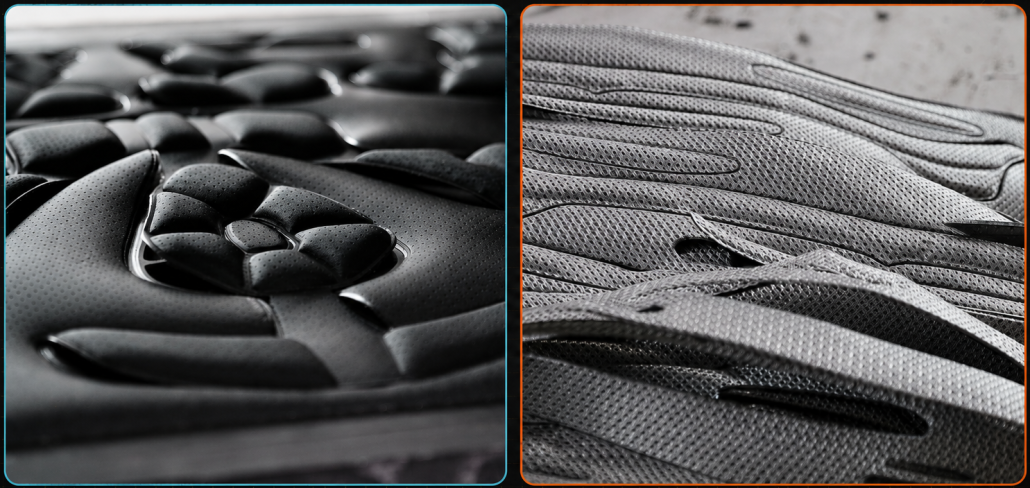
But in real-world helmet development, material selection cannot be separated from the manufacturing process. The forming method can influence which helmet padding materials are practical, how precisely the liner can be shaped, how consistently it can be manufactured, and ultimately how the finished liner performs in use.
So should helmet liner development really begin with the material—or should the material, performance requirements, and manufacturing process be considered together from the beginning?
The outer shell and impact liner may already be defined. Now you need to develop the comfort padding that sits between the wearer and the helmet’s EPS or EPP impact-absorbing liner.
At this stage, seemingly simple questions quickly become important engineering decisions:
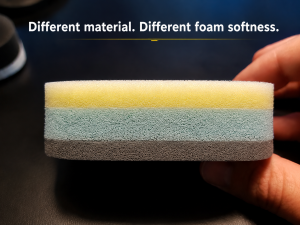
Should the helmet padding use conventional foam or a low-moisture-absorption EVA? How thick should the comfort pads be? Does the fabric need antimicrobial or moisture-wicking properties? How will the pads attach to the helmet? And can the selected material be formed consistently and reliably in mass production?
These are exactly the kinds of questions that helmet product engineers, R&D teams, technical buyers, sourcing professionals, and product developers need to resolve before a helmet comfort liner can successfully move from concept and prototyping into production.
At Aurora Sports, we regularly work with customers on custom helmet liner development and helmet padding manufacturing for sports helmets, industrial safety helmets, rescue helmets, climbing helmets, equestrian helmets, and other specialized protective headgear.
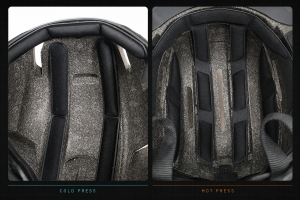
Cold-Press vs. Hot-Press Helmet Liner Manufacturing
One question that frequently arises during development is whether the comfort liner should be manufactured using cold-press forming or hot-press forming.
Both processes can produce shaped helmet padding, but they are suited to different materials, liner constructions, performance requirements, production methods, and cost targets.
For example, a project focused primarily on cost efficiency and conventional foam padding may naturally favor hot pressing.
A helmet liner requiring lower moisture absorption, improved cushioning, faster drying, greater durability, or advanced materials such as EVA, TPU, or D3O-type structures may be better suited to a cold-press process.
This is why the first question should not simply be:
“Should we cold press or hot press this helmet liner?”
The better engineering question is:
“What does this helmet liner need to do?”
Once the intended helmet application, required performance, material system, padding thickness, comfort requirements, moisture-management needs, attachment method, target cost, and production volume are understood, the right combination of helmet liner material and forming process becomes much easier to determine.
Coming Next:
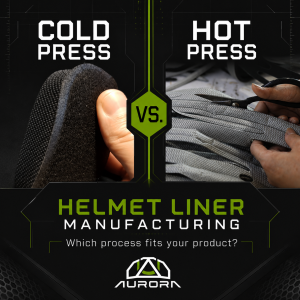
A Technical Comparison of Cold-Press and Hot-Press Helmet Liners
We are preparing a technical article that takes a closer look at cold-press vs. hot-press helmet liner manufacturing, including:
- Which helmet padding materials are best suited to each process
- The advantages and limitations of cold pressing and hot pressing
- EVA, conventional foam, TPU, and other liner material options
- Cushioning and moisture-management considerations
- Tooling and production considerations
- Cost versus performance
- Factors to evaluate before committing to tooling and mass production
Stay tuned.
Developing a Custom Helmet Liner or Padding System?
If you are developing a new helmet, improving an existing comfort liner, or comparing helmet padding materials, thicknesses, cold-press and hot-press processes, attachment methods, or tooling options, please reach out to Aurora Sports.
You can share your existing helmet construction, drawings, samples, target performance requirements, or other project information with our team.
Drawing on our experience in helmet development, custom helmet liner manufacturing, tooling, and mass production, we can help evaluate the available options and identify a practical solution to move your project from concept and prototyping through to mass production.
Contact Us:
📱: +1 (657) 762-7550
📧: sales@aurorasport.com


